
Early Warning Signs of Masonry and Structural Failure
Start with an inspection, not a rebuild. Look for loose mortar, flaking bricks, cracks at the chimney top, and water stains near the fireplace. A chimney specialist can find the cause and tell you whether a targeted repair, such as repointing mortar or fixing flashing, will solve it. Get a written quote that separates urgent safety work from repairs that can wait.
In Cook County, water that freezes inside brick and mortar can turn small cracks into costly damage. Fixing a leak early may help you avoid replacing part of the chimney later. If the stack leans or smoke enters the room, stop using the fireplace until a professional checks it.
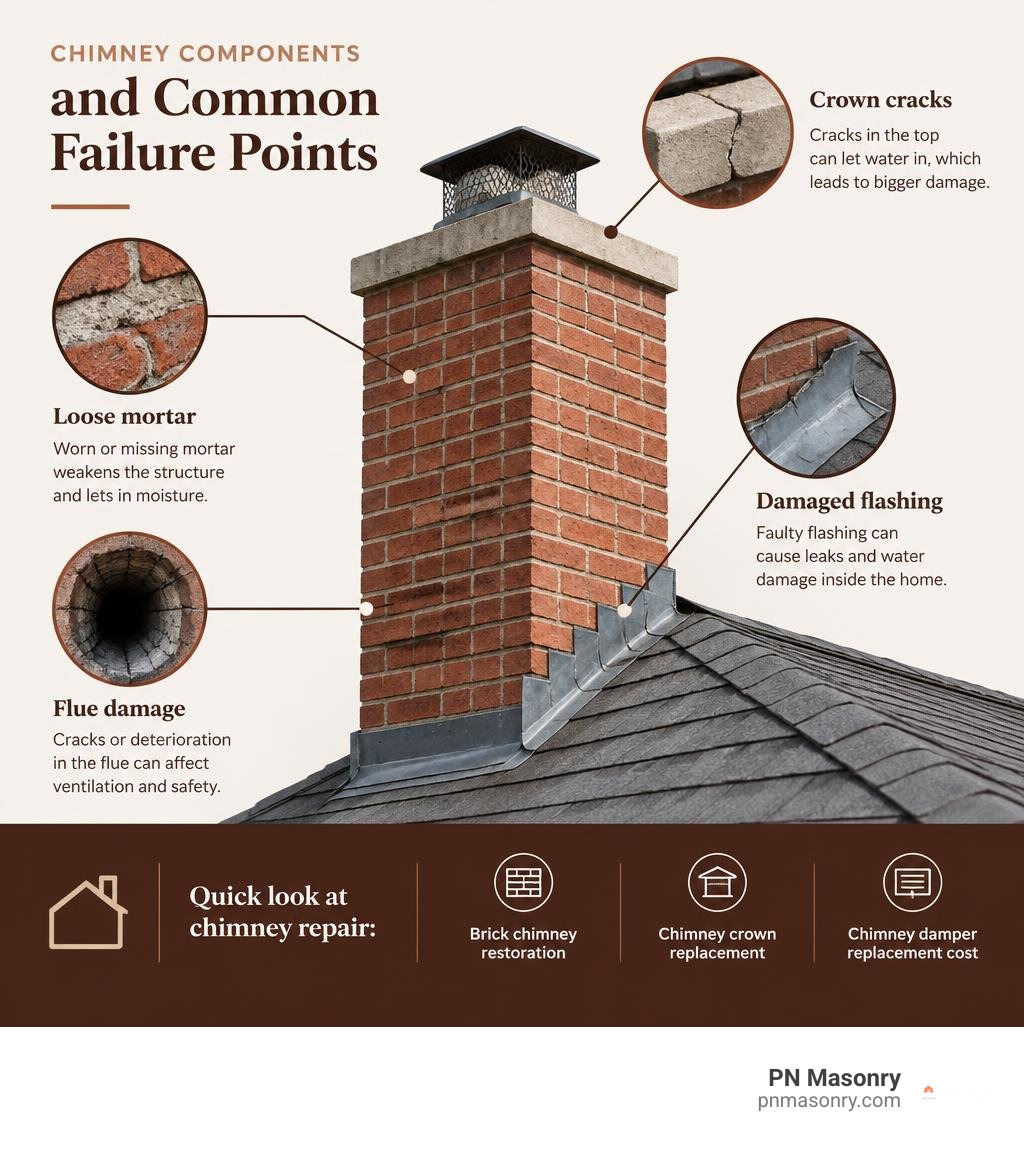
Quick look at chimney repair:
Catching chimney problems before winter sets in is the most effective way to keep your maintenance budget intact. A visual inspection from the ground using a pair of binoculars can reveal warning signs long before water pours into your living room. The Chimney Safety Institute of America recommends annual inspections to catch exactly these kinds of issues early.
One of the first red flags you might notice is efflorescence, which appears as a white, powdery staining across your brickwork. While the powder itself is simply salt left behind by evaporating water, it proves that moisture is moving freely through your masonry. If that moisture stays trapped, winter freeze-thaw cycles cause the water inside the porous clay to expand, leading to spalling bricks where the outer faces flake, chip, and pop off completely.
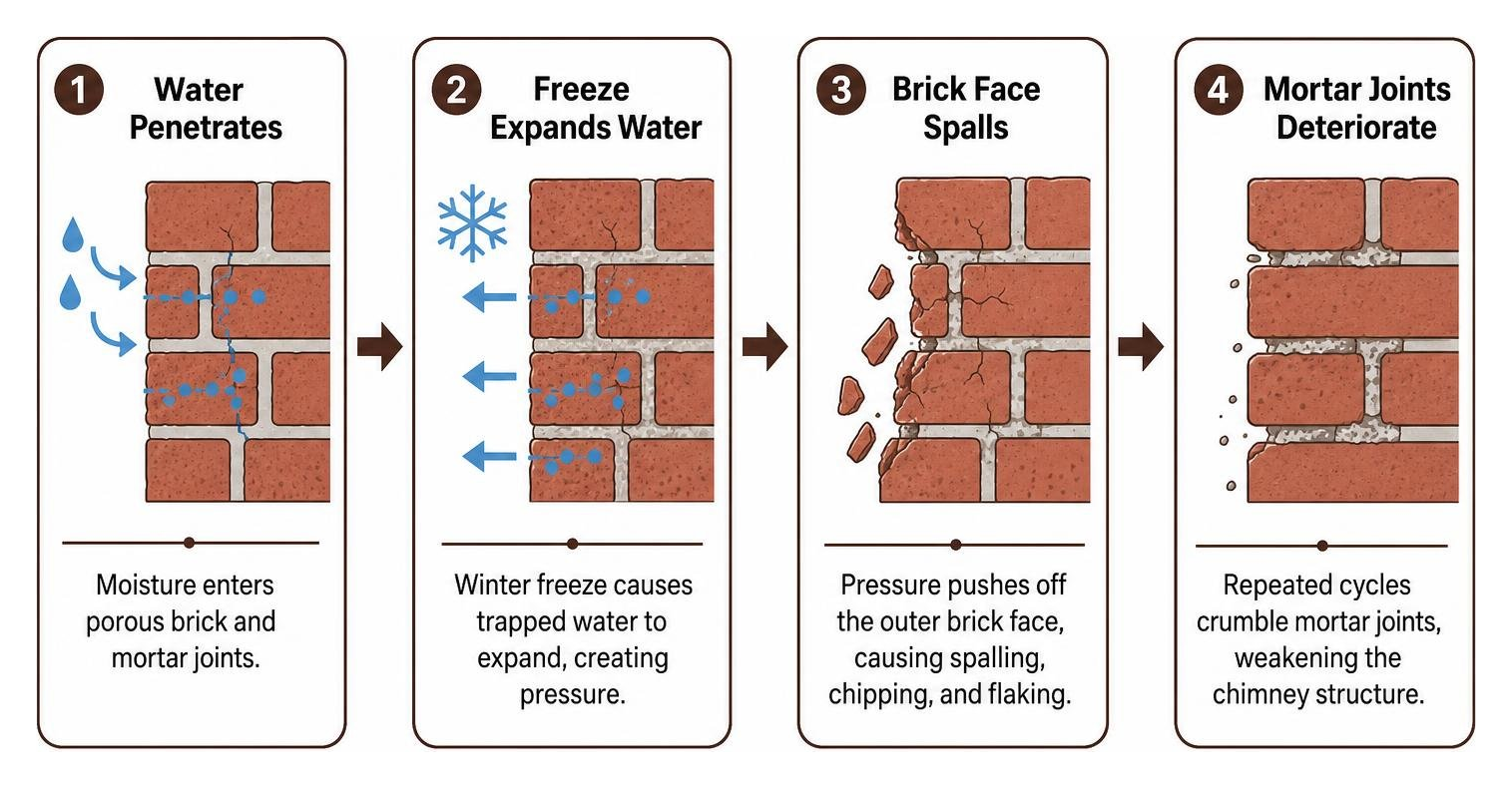
Alongside spalling, crumbling mortar joints weaken the structural interlock of your chimney. When mortar recedes more than half an inch, the stack loses stability and allows direct water ingress into the flue structure. This moisture compromises the flue lining, risking smoke backup and dangerous carbon monoxide leaks into your living spaces. You can protect your stack against this moisture cycle by sealing a brick chimney with penetrating repellent before deep spalling takes hold.
Identifying Exterior Stack and Crown Deterioration
The uppermost portion of your chimney takes the direct brunt of rain, wind, and hail. The chimney crown—the concrete or mortar slab sealing the top of the brick stack—often develops hairline cracks as your house settles. Left unsealed, these cracks widen, breaking the seal around the flue tiles and allowing water to run down the interior masonry walls.
On historic or masonry stacks, eroding mortar fillets and damaged flaunching (the mortar bed holding the chimney pots) can allow pots to loosen and lean. If you notice an entire stack leaning or separating at the roofline penetration, the structural integrity of the masonry has been compromised.
| Early Warning Symptom | Root Cause | Repair Urgency |
|---|---|---|
| White powder on bricks (Efflorescence) | Moisture penetration through porous brickwork | Moderate — Seal masonry before freeze-thaw cycles |
| Surface flaking / chipping (Spalling) | Trapped water expanding during winter freezes | High — Replace damaged bricks to prevent structural failure |
| Recessed, sandy mortar joints | Weather erosion and age degradation | High — Repoint/tuckpoint to restore joint stability |
| Hairline cracks in top concrete slab | Thermal expansion, poor mix, or house settling | High — Seal or patch crown to prevent interior water entry |
| Rust on damper or firebox | Water entering flue via missing cap or bad crown | Immediate — Install cap or repair top slab |
| Stack visibly leaning or tilting | Foundation shifting or deep mortar failure | Critical — Stop fireplace use immediately; full assessment needed |
Spotting Interior Moisture Leaks and Draft Problems
Not all chimney damage is visible from your yard. Inside your home, water leaks often masquerade as mysterious brown water rings on ceilings, damp drywall surrounding the chimney breast, or peeling wallpaper near the fireplace.
Inside the firebox, check your metal damper for surface rust. A rusted damper indicates rain is pouring directly down an uncapped flue or seeping through cracked flashing. Cracks along the firebrick or deteriorating mortar joints in the firebox also compromise fire containment. If you smell a smoky, acrid odor on humid days or experience sluggish drafting that sends smoke into your room, your flue walls may be compromised. Homeowners dealing with drafting issues or interior smoke can benefit from expert chimney fireplace restoration to correct the airflow and repair firebox masonry.
Affordable Chimney Repair Solutions and Expected Costs
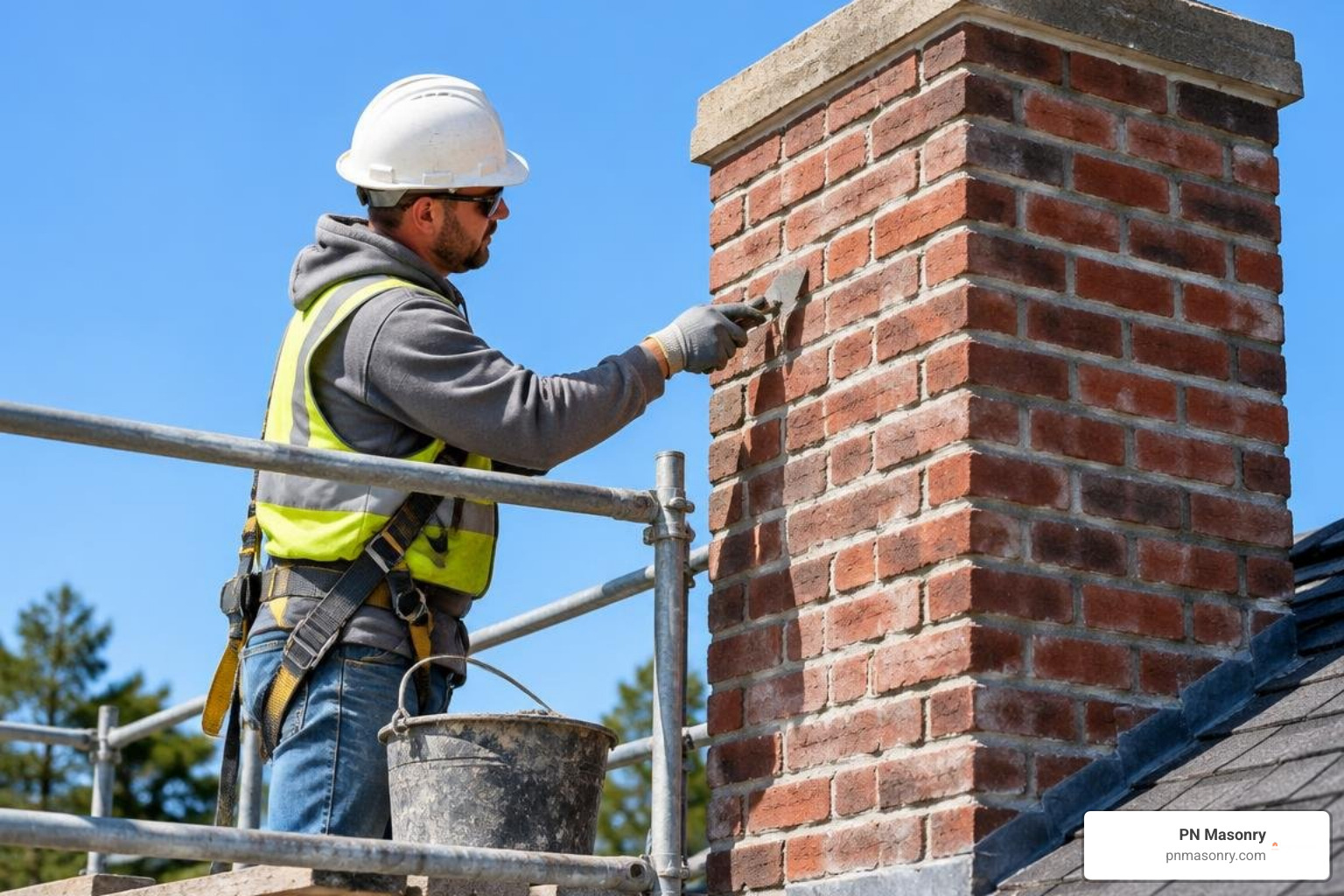
Understanding typical repair costs prevents surprise bills and helps you plan your project smartly. Repair pricing depends on the extent of damage, the height and pitch of your roof, and whether specialized scaffolding is required to access the stack safely. In Cook County, local building configurations and seasonal weather windows also influence project timelines.
When you need reliable work, booking professional chimney services gives you an upfront, comprehensive assessment. A thorough chimney inspection typically costs around $325.00 per structure, and pairing that with a chimney sweep runs approximately $75.00 per flue. Investing in this baseline diagnostic keeps you from paying for structural reconstructions you do not actually need.
Most Common Types of Chimney Repair
Most masonry damage can be resolved through targeted repairs rather than complete tear-downs. Here is what typical repairs look like in practice:
- Tuckpointing and Repointing: Involves raking out decayed mortar to a depth of about 1/2 to 3/4 inch and packing fresh mortar tightly into the joints. This restores weatherproofing and structural strength without tearing down the brickwork.
- Crown and Cap Replacement: Minor surface cracks on a crown can be patched with elastomeric sealants for $200 to $500. However, when the slab is completely shattered, evaluating chimney crown replacement costs helps you determine whether a custom-poured concrete slab ($3,500 to $6,000 for a 4-inch reinforced slab) or a standard pre-cast cap is the most budget-conscious path.
- Flashing Repair: Where the chimney meets the roof deck, step and counter flashing prevent water from running into your attic. Repairing or resealing pulled flashing costs between $800 and $2,000, which is far cheaper than replacing water-damaged rafters and ceilings. If your flashing has pulled loose in our local area, scheduling chimney flashing repair in Franklin Park IL stops leaks before the next storm.
- Partial Stack Rebuilding: If only the top few courses of brick above the roofline are crumbling, masons can dismantle and rebuild just the damaged rows. Partial reconstructions generally range from $300 to $1,000 depending on height and brick count.
Waterproofing and Rebuilding on a Budget
Waterproofing is one of the most cost-effective preventative investments available for brick chimneys. Professional-grade, 100% breathable siloxane or silane penetrating water repellents cost between $400 and $1,200 to apply across an entire stack. Unlike silicone paints, which trap moisture behind an impermeable layer and accelerate freeze-thaw spalling, breathable repellents let internal water vapor escape while shedding driving rain.
If neglect has left the stack bowing, crumbling, or leaning past repair, full reconstruction is necessary to prevent a collapse. A complete chimney reconstruction can cost up to $5,000 or more depending on total height, liner requirements, and accessibility. In cases of severe structural decay, arranging complete chimney rebuilding in Franklin Park IL ensures that your new masonry meets all modern fire safety codes while matching your home’s historic exterior.
Maintenance Strategies and Smart Budgeting
A smart maintenance routine extends the lifespan of your repairs and helps you avoid emergency calls. Keeping the interior of the flue clean directly protects the exterior masonry, because corrosive soot and moisture-heavy creosote eat away at clay liners and mortar joints from the inside out.
One of the best low-cost upgrades is installing a stainless steel or copper chimney cap equipped with spark arrestor mesh. A durable cap stops driving rain from entering the open top, prevents downdrafts, and keeps birds and squirrels from nesting in your flue. To find the right dimensions and mounting style for your home, review our complete guide to choosing a chimney cap.
DIY vs. Professional Chimney Repair for Cost Savings
Taking on minor maintenance tasks yourself can save money, but you must know where DIY ends and professional masonry begins. Working at roof height presents fall risks, and improper structural repairs can leave hidden fire hazards inside your walls.
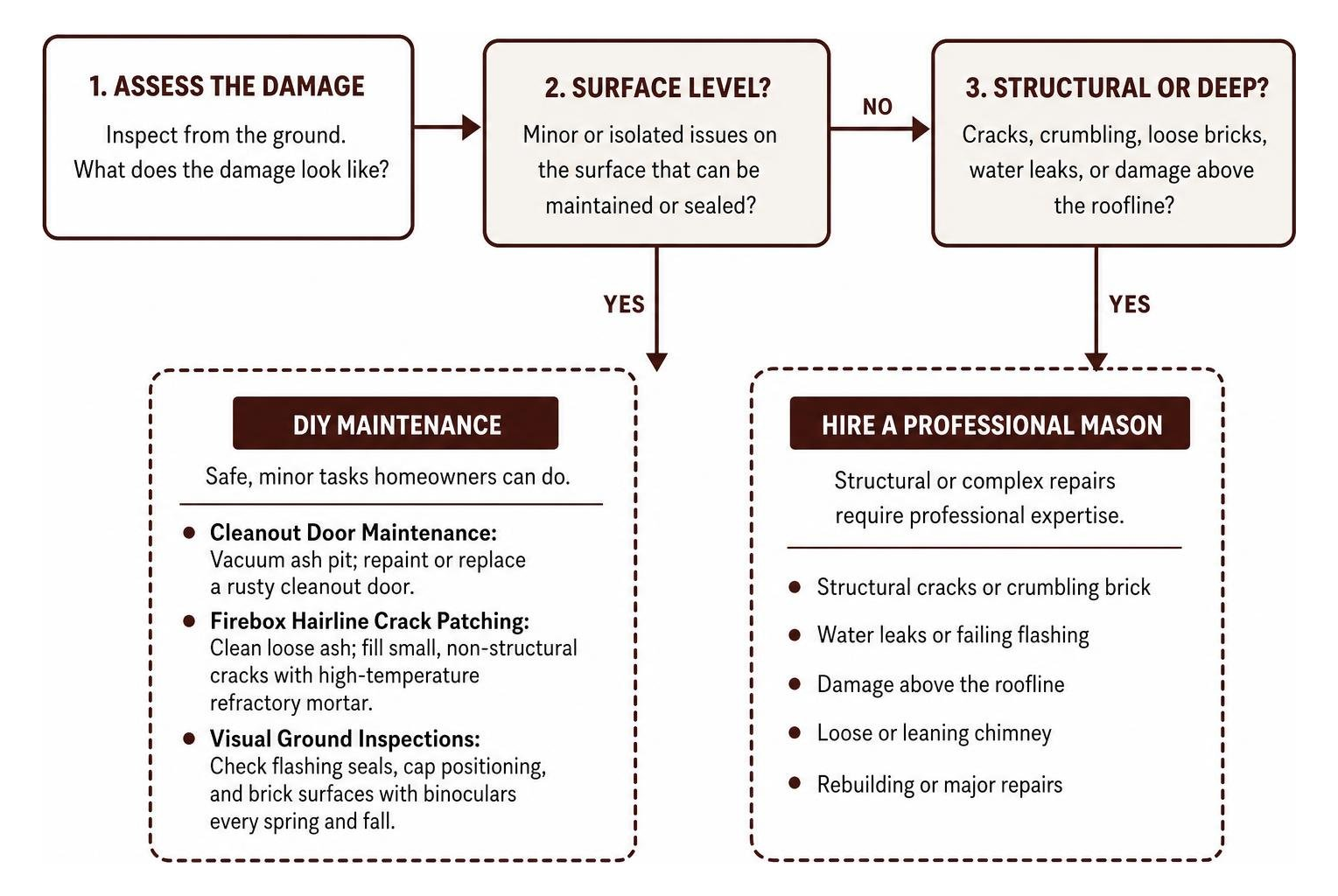
Safe DIY Maintenance Tasks:
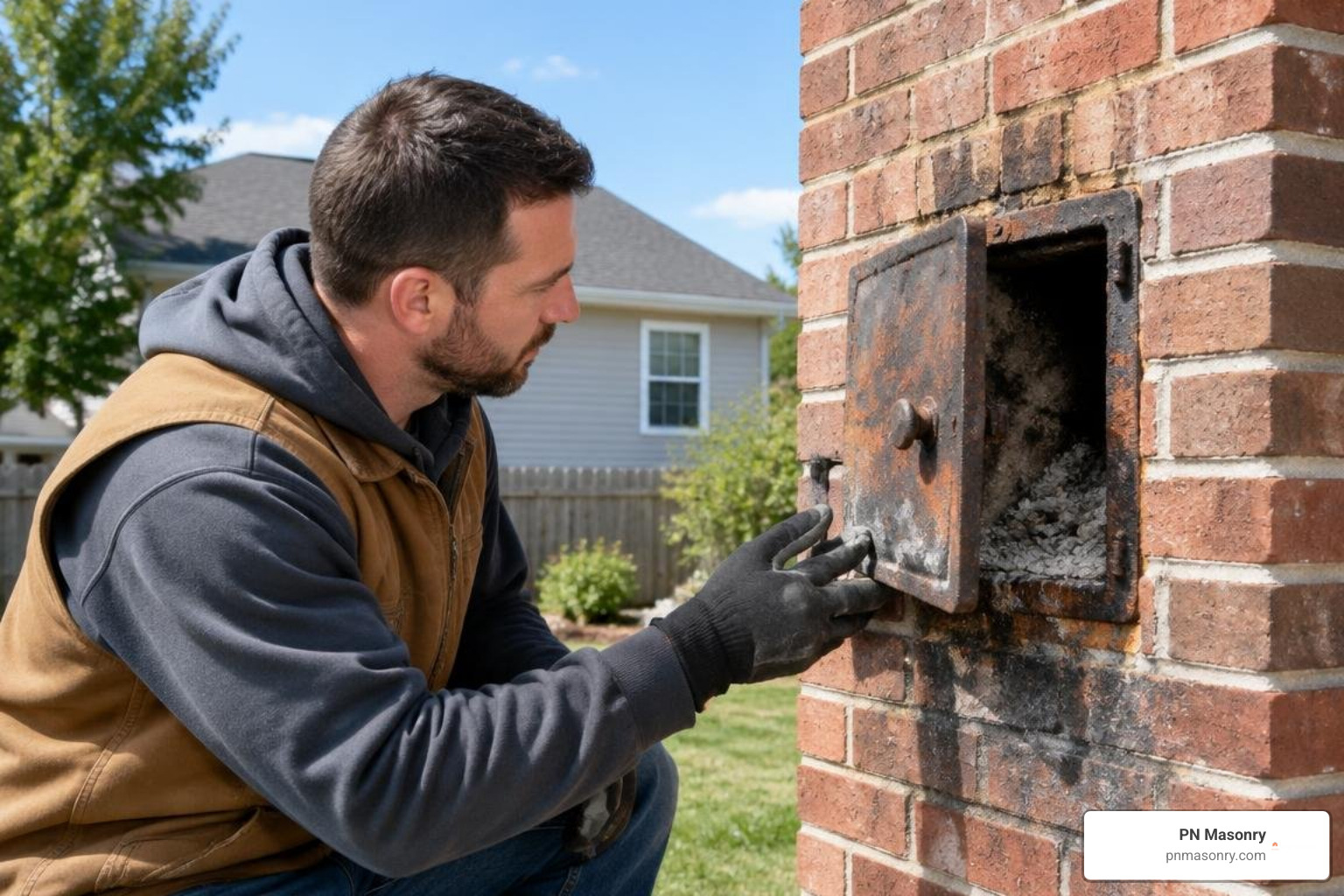
- Cleanout Door Maintenance: Vacuuming out the ash pit and repainting or replacing a rusty cleanout door.
- Firebox Hairline Crack Patching: Cleaning out loose ash and filling small, non-structural firebox cracks using pre-mixed, high-temperature refractory mortar.
- Visual Ground Inspections: Checking flashing seals, cap positioning, and brick surfaces with binoculars every spring and fall.
Repairs Requiring a Professional Mason:
- Deep Mortar Tuckpointing: Raking out joints requires diamond-wheel grinders and precise depth control to avoid cutting into the bricks.
- Historic Lime Mortar Matching: Older homes built before the mid-20th century use softer lime-based mortar. Applying modern Portland cement to historic brick traps moisture and crushes the soft antique clay.
- Flue Relining: Installing clay tiles or stainless steel liners ($4,500 to $6,000) requires specialized sizing calculations and insulation wraps to meet building codes.
- Structural Rebuilding: Any leaning, shifted bricks, or rebuilds above the roofline require proper scaffolding, staging, and load-bearing masonry techniques.
Preventative Chimney Care
How you run your fireplace directly impacts how frequently you will need repairs. Burning unseasoned, wet firewood creates dense, sticky creosote that coats the flue tiles and increases the risk of chimney fires.
To keep your venting system safe and clean, follow these fuel-specific maintenance schedules:
- Wood-Burning Stoves in Regular Use: Sweep every three months during peak heating season.
- Wood-Burning Open Fireplaces: Sweep at least twice a year to clear creosote glaze.
- Coal Open Fires: Sweep twice a year to remove heavy soot deposits.
- Smokeless Fuel Open Fires or Stoves: Sweep annually to clear acidic ash residue.
- Oil and Gas Appliances: Inspect and sweep annually to ensure clear drafting and prevent carbon monoxide blockages.
Always check that carbon monoxide and smoke alarms on every level of your home are tested monthly and working properly.
How to Hire a Chimney Specialist Without Overspending
Finding the right contractor ensures you get durable repairs without paying for unnecessary add-ons. Look for masons who have clear experience working with residential brick structures as well as commercial masonry standards.
When evaluating quotes, use these guidelines:
- Require Detailed Itemized Estimates: Make sure the quote separates basic cleaning and maintenance from structural brickwork, crown rebuilds, and flashing repairs.
- Verify Insurance and Licensing: Ensure the company carries full general liability and workers’ compensation insurance to protect your property during roof-level work.
- Ask About Permitting and Code Compliance: Structural rebuilds and liner installations often require municipal building permits to comply with local safety codes.
- Clarify Mortar Type: Ensure your mason understands whether your home requires a standard Type N/Type S mix or a specialized historic lime mortar blend.
If you are looking for vetted professionals for your hearth and chimney stack, consulting a guide to local brick fireplace restoration services will help you ask the right questions and evaluate past project portfolios.
Frequently Asked Questions About Chimney Care
How much do typical chimney repairs cost?
Minor repairs like patching small crown cracks or replacing a standard chimney cap typically cost between $200 and $500. Flashing repairs generally run from $800 to $2,000 depending on access and roof layout. Extensive projects, such as full-depth repointing across a tall stack, pouring a 4-inch steel-reinforced concrete slab crown ($3,500 to $6,000), or installing a new stainless steel flue liner ($4,500 to $6,000), require a larger budget but restore long-term safety.
Can I repair damaged chimney mortar and crowns myself?
You can handle minor surface patching on accessible fireboxes or seal hairline cracks in the crown using brushable elastomeric crown coatings. However, full tuckpointing, rebuilding crowns, and repairing high-pitch roof flashing should be left to professional masons. Improper mortar mixes can ruin adjacent bricks, and working at roof heights without professional scaffolding creates serious safety risks.
How often should I check my chimney for visible damage?
Inspect your chimney visually at least twice a year—once in early autumn before you light your first fire, and once in spring to check for winter freeze-thaw damage. You should also take a quick look after severe windstorms, hail events, or prolonged sub-zero cold snaps to make sure your cap is intact and no fresh brick spalling has occurred.
Conclusion
Staying ahead of chimney maintenance is all about early action. Catching a hairline crown crack, resealing loose flashing, or tuckpointing eroding mortar joints today prevents structural instability and keeps thousands of dollars in your pocket over time.
At PN Masonry, we provide straightforward, reliable masonry solutions for residential brick and commercial block properties across Cook County, Illinois. Whether you need preventative tuckpointing, crown restoration, or complete stack rebuilding, contact our team to schedule your chimney inspection and keep your home safe, warm, and protected for years to come.