
Chimney Damper Replacement Cost: What to Budget
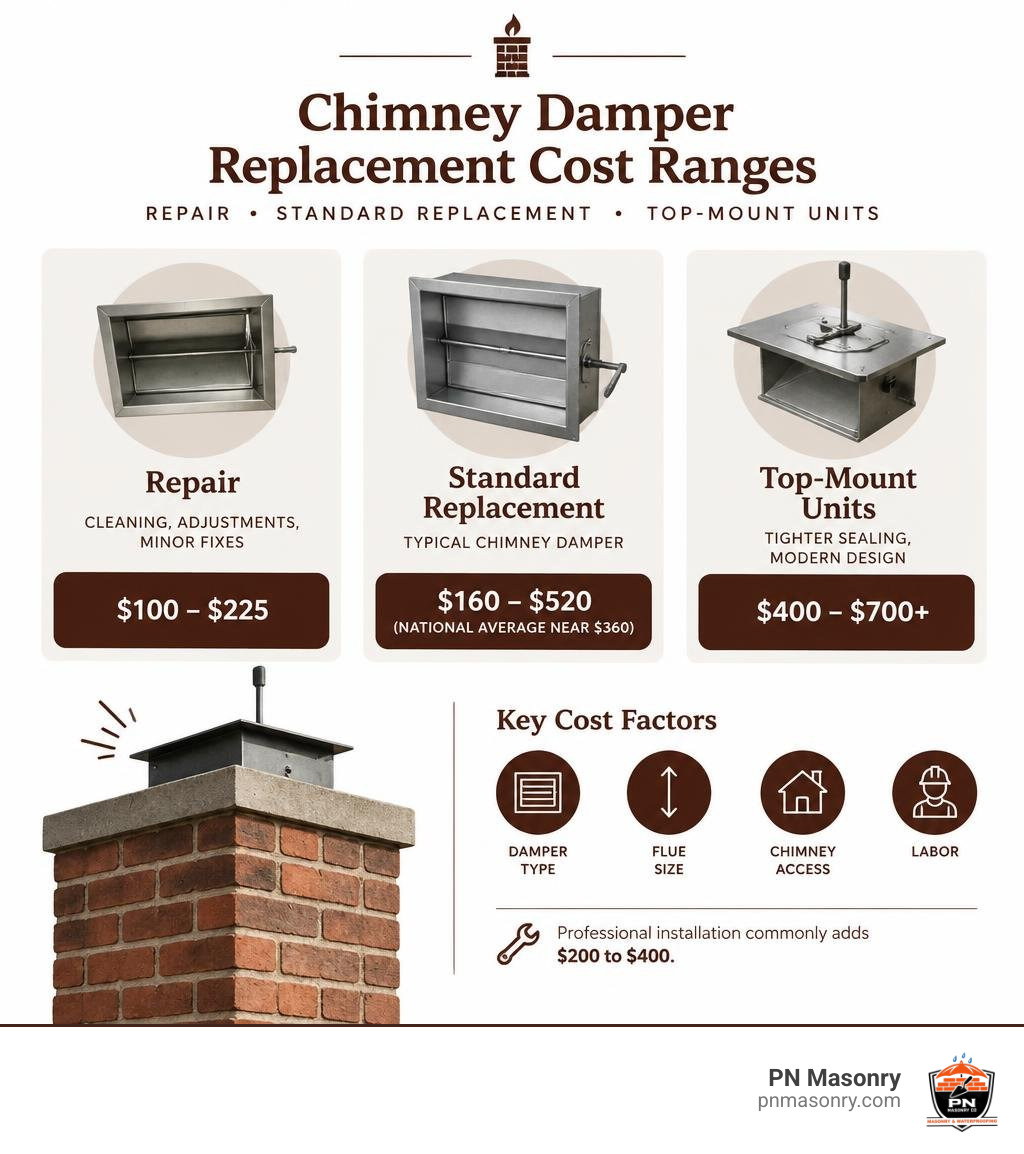
Most homeowners pay about $160 to $520 for chimney damper replacement, with a national average near $360. Simple repairs, such as cleaning creosote or adjusting a stuck mechanism, may cost $100 to $225. Costs can reach $700 or more when the damper is large, roof-mounted, badly rusted, or needs masonry repairs.
The biggest price factors are the damper type, flue size, chimney access, and labor. Professional installation commonly adds $200 to $400, but it can help prevent smoke-venting problems, air leaks, and damage to the firebox or chimney masonry.
A failed damper is more than an annoyance. When it will not close, cold air can enter through the fireplace and let heated indoor air escape. When it will not open, using the fireplace can allow smoke and dangerous combustion gases to back up into the home. For a wood-burning fireplace, the damper must be fully open before lighting a fire.
This guide explains what drives replacement pricing, when a repair may be enough, and when it makes sense to upgrade to a tighter-sealing top-mount damper.
Chimney damper replacement cost helpful reading:
Average Chimney Damper Replacement Cost and Pricing Factors
Understanding chimney damper expenses starts with looking at the individual components of the job. In our masonry practice across Cook County, Illinois, we see chimney setups ranging from historic wood-burning hearths in century-old bungalows to modern multistory fireplace chases. Across the country, total project budgets typically span between $160 and $700, though unique setups with custom fabrication or high roof pitches can push project totals upward.
The table below breaks down typical replacement project ranges across standard installation scopes:
| Installation Scope | Hardware & Materials | Professional Labor | Estimated Total Cost |
|---|---|---|---|
| Minor Throat Damper Repair | $20 – $75 | $80 – $150 | $100 – $225 |
| Direct Throat Damper Replacement | $80 – $250 | $150 – $300 | $230 – $550 |
| Standard Top-Mount Damper Unit | $120 – $320 | $200 – $400 | $320 – $720 |
| High-Efficiency Insulated Top-Mount | $250 – $550 | $250 – $450 | $500 – $1,000 |
| Complex Masonry Retrofit & Damper | $300 – $600 | $400 – $800+ | $700 – $1,400+ |
Several underlying variables dictate where your home falls along this spectrum. While standard hardware parts are relatively consistent, labor rates vary between $65 and $125 per hour, often trending higher in dense metropolitan areas. An independent industry pricing analysis highlights that regional material distribution, local building codes, and municipal permit requirements (which can add $100 to $400 if extensive masonry reconstruction is needed) are primary drivers of overall variance.
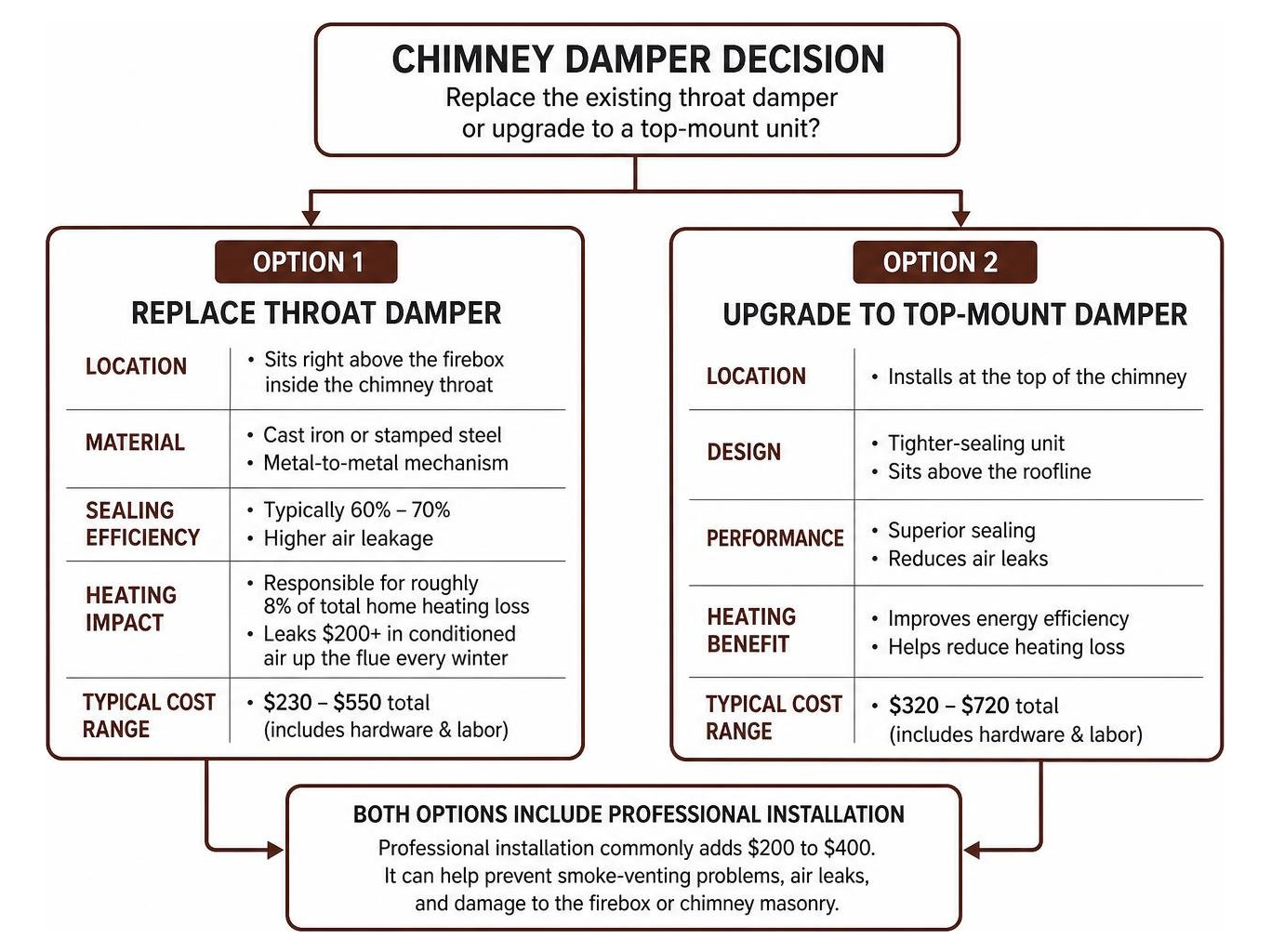
Comparing Top-Mount vs. Throat Chimney Damper Replacement Cost
The physical location of your damper plays a massive role in both the upfront replacement bill and your ongoing heating bills.
- Traditional Throat Dampers: These units sit right above the firebox inside the “throat” of the chimney. Made primarily from heavy cast iron or stamped steel, they operate on a metal-to-metal hinge or screw mechanism. Because they rely on unsealed metal edges, they typically offer only 60% to 70% sealing efficiency. A traditional throat damper is responsible for roughly 8% of total home heating loss, leaking $200 or more in wasted conditioned air up the flue every winter. Direct replacement hardware costs $80 to $250, but fitting a new cast-iron plate into an aged, warped frame can require tedious manual labor.
- Top-Mount Energy Dampers: Also known as cap dampers or lock-top mechanisms, these units mount directly to the chimney crown at the very top of the flue. They seal with a spring-loaded silicone rubber gasket that delivers roughly 95% sealing efficiency. When closed via a steel cable routed down into the firebox, they create an airtight barrier at the roofline. Top-mount damper hardware ranges from $120 to $500, but because they seal the entire flue from cold air, rain, and nesting animals, they often pay for themselves in energy savings within 2 to 4 years.
Homeowners seeking detailed estimates on specialized setups can also review HVAC damper replacement costs and typical prices to see how airflow duct dampers compare to traditional solid-fuel venting assemblies.
Flue Sizing and Masonry Accessibility Considerations
Damper costs also scale with the dimensions of your chimney flue:
- Standard Sizes (8″x8″, 8″x13″, 8″ Round): Common dimensions keep hardware prices affordable ($100 to $200 for basic components) because manufacturers produce these dampers in high volume.
- Large or Irregular Flues (13″x13″, 13″x18″, 221+ sq. in.): Larger openings require heavier cast-iron assemblies or wide-span top dampers, lifting material costs to $250–$400.
- Custom Fabrications: Older masonry flues with non-standard curves or non-rectangular profiles may require custom adapter plates or flue extensions before a modern damper will seat properly.
Accessibility represents the second major labor driver. A low-pitch roof on a single-story ranch requires basic ladder access and minimal site prep. In contrast, a steep three-story chase, roof tiles requiring safety staging, or an inaccessible attic crawl space adds billable hours for safety rigging and careful navigation.
Chimney Damper Repair vs. Full Replacement
Before ordering a complete replacement assembly, evaluate whether the existing damper can be refurbished. Property owners can consult comprehensive damper repair cost insights to assess specific mechanical failures against current replacement rates.
When Minor Adjustments and Cleaning Are Sufficient
Not every sticking damper requires an expensive trip to the salvage yard. In many cases, routine fireplace maintenance resolves the problem for $100 to $225:
- Creosote and Soot Buildup: Unburned wood byproducts collect on the damper frame, locking the plate in place. A thorough sweep and wire-brush cleaning often restores full mobility.
- Dropped or Detached Linkages: The cotter pins, rotary ratchets, or poker handles operating a throat damper can come loose. Replacing a worn handle with a cold-rolled steel linkage costs around $20 to $50 in parts.
- Top-Mount Cable Friction: For top-mount dampers, a frayed or misaligned control cable can make opening difficult. Installing a new 50-foot stainless steel cable pack ($30 to $60) frequently restores smooth operation.
- Lack of Lubrication: High-temperature graphite or silicone spray can loosen stiff pivot pins that have seized due to summer humidity.
Signs That Require Immediate Damper Replacement
Certain structural problems make replacement unavoidable:
- Warped Metal Plates: Intense direct heat over decades causes cast iron to bow or twist. A warped plate cannot seat flush against its frame, leaving permanent gaps that leak conditioned air.
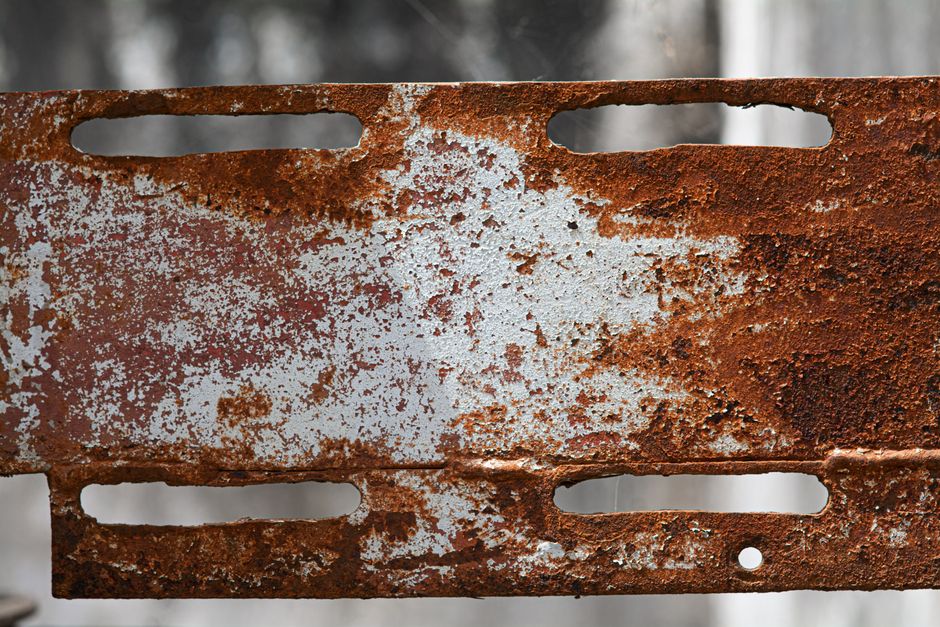
- Severe Corrosion and Flaking Rust: When rainwater mixes with acidic soot, it accelerates rust. Once the damper plate or frame begins crumbling, structural integrity is lost.
- Cracked Cast-Iron or Masonry Housing: If the damper’s supporting frame has split, smoke can seep directly into the chimney breast or surrounding drywall.
- Incompatible Conversion: If you are transitioning away from a drafty wood fireplace, or if older components no longer meet local safety codes, installing a modern, sealed unit is the only sound option.
For an extensive review of national figures and diagnostic advice, the Angi chimney damper replacement cost guide provides additional homeowner survey data.
DIY vs. Professional Chimney Damper Replacement Cost Breakdown
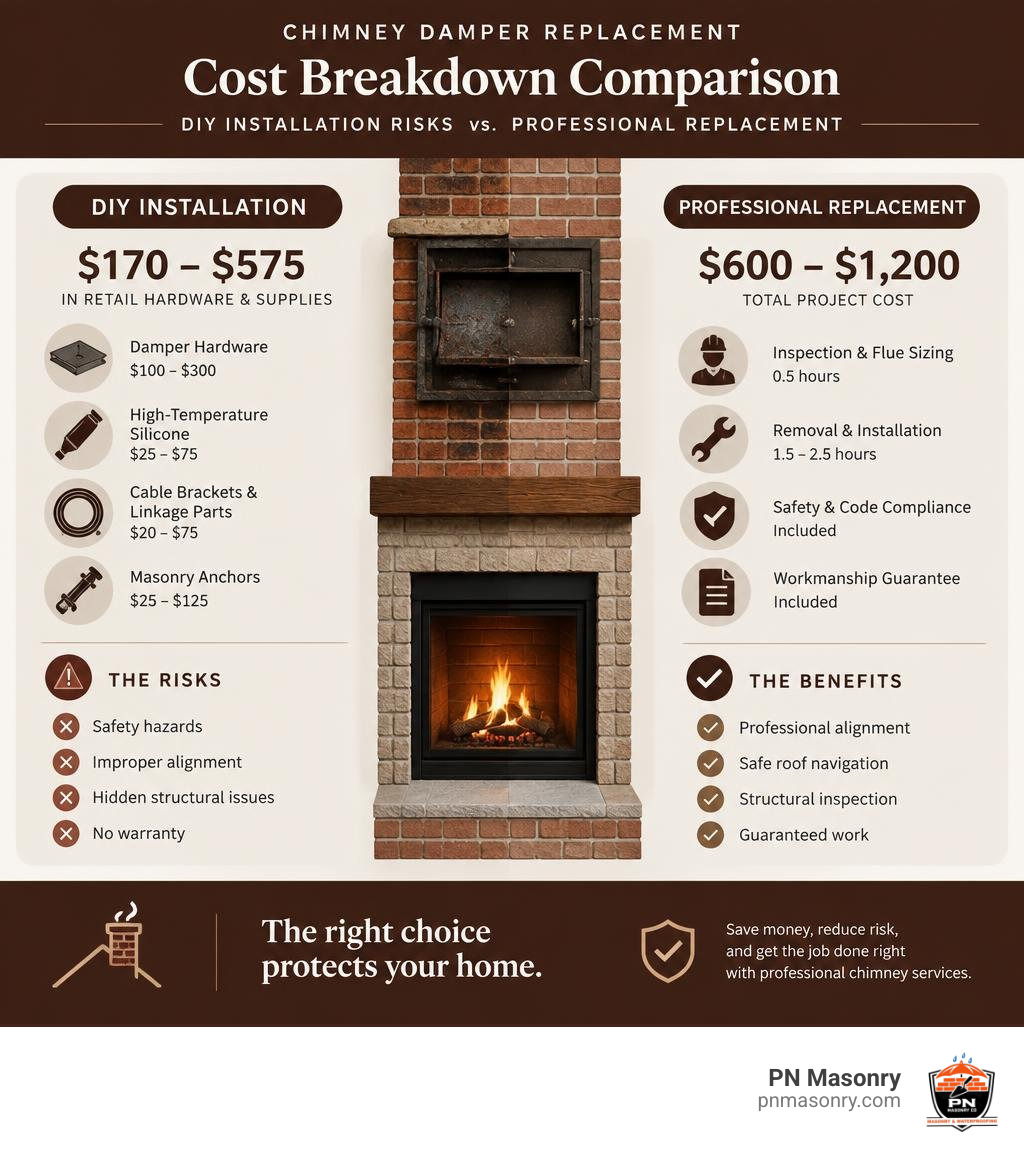
Taking on home improvement projects yourself is tempting, but chimney work introduces unique safety and structural challenges. A direct DIY installation typically incurs $170 to $575 in retail hardware, high-temperature silicone adhesives, cable brackets, and masonry anchors.
However, hiring our team for dedicated chimney services provides essential benefits: professional alignment, safe roof navigation, structural inspections, and guaranteed work backed by experienced masonry technicians.
Labor Hours and Contractor Rates
When you hire a licensed masonry professional, the project typically involves:
- Inspection and Flue Sizing (0.5 hours): Confirming the damper type, measuring the inner clay tile or metal liner, and checking for firebox clearance.
- Site Preparation and Containment (0.5 hours): Laying drop cloths in the living area and securing ladders or roof scaffolding.
- Removal and Surface Prep (1 to 2 hours): Extracting the corroded plate, grinding out deteriorated mortar joints around the frame, and cleaning the smoke shelf.
- Mounting and Sealing (1 to 1.5 hours): Bolting the new assembly, applying high-temperature refractory mortar or silicone, routing the control cable, and mounting the firebox bracket.
- Operational and Draft Testing (0.5 hours): Conducting smoke pencil tests to verify a tight seal when closed and unrestricted draft when open.
Most standard installations take between 1.5 and 3 hours of on-site labor. If the smoke chamber requires parging or surrounding brickwork needs tuckpointing, the job can take 4 to 6 hours.
Common Pitfalls of DIY Damper Installation
DIY damper replacements often run into trouble in a few key areas:
- Mortar and Flue Damage: Forcing a rusted throat frame can crack fragile clay flue tiles or dislodge surrounding firebricks, creating expensive structural repairs.
- Improper Sizing: Purchasing a damper based on outer chimney measurements rather than inner flue dimensions results in poor sealing and smoke spillage.
- Incomplete Weather Seals: Failing to properly seal a top-mount unit allows rainwater to seep under the mounting plate, soaking into the chimney masonry.
- Safety Hazards: Working on steep or icy rooflines without fall-protection gear carries serious personal risk.
If you are located in Cook County and need localized service, explore our dedicated chimney services in Franklin Park, IL for prompt assistance from local masonry specialists.
Essential Chimney Add-Ons and Preventative Upgrades
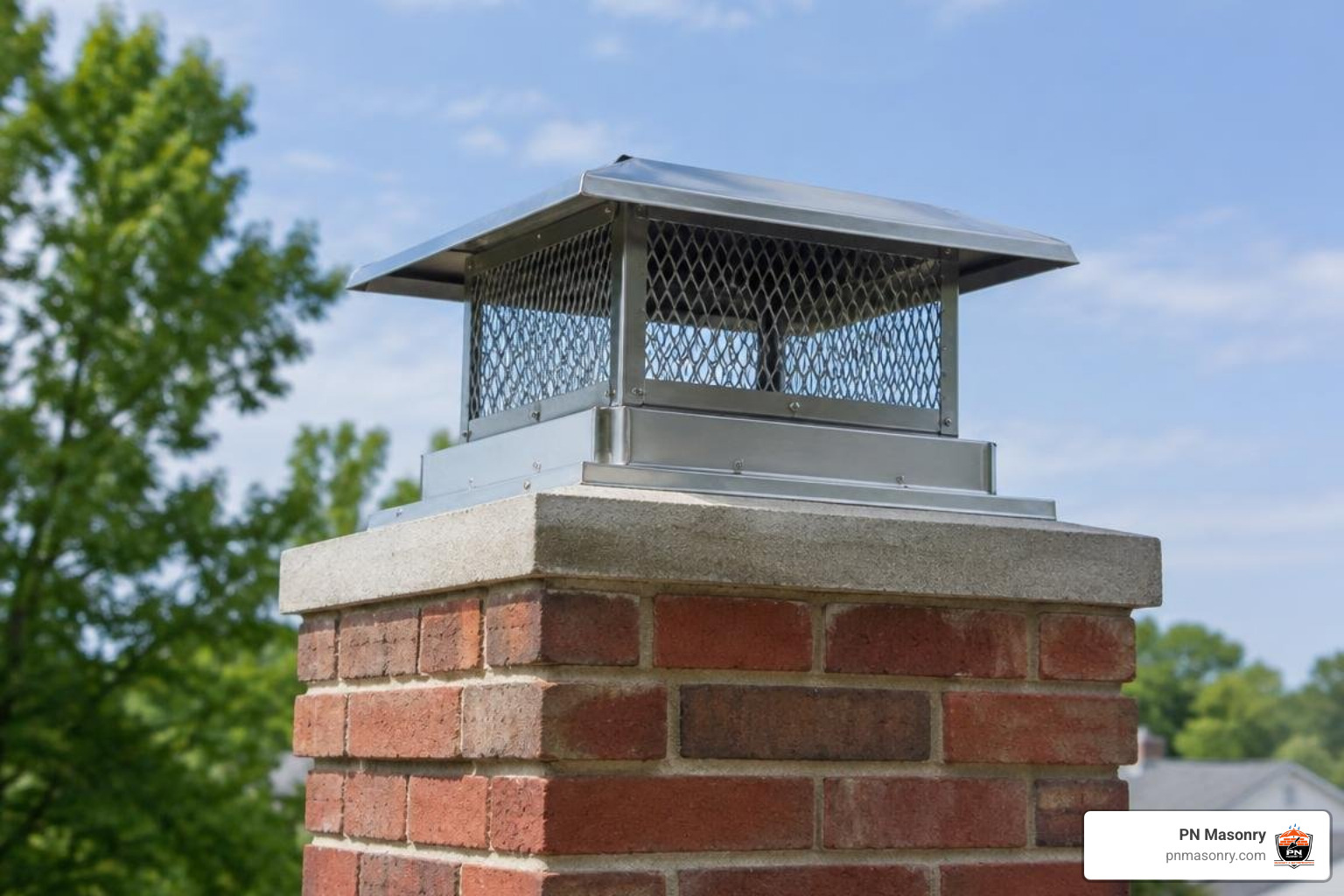
When replacing a damper, addressing adjacent chimney components can prevent future service calls and save money on bundled labor.
Flue Liners and Smoke Chamber Sealing
A functional damper relies on a sound flue to vent exhaust safely out of the home:
- Clay Tile Repair: Cracked or spalling flue tiles can catch soot and compromise draft. Repairing cracked flue tiles generally costs $200 to $400 per section.
- Stainless Steel Relining: If the interior clay flue has deteriorated extensively, installing a durable stainless steel liner ($1,500 to $5,000) provides a lifetime exhaust pathway.
- Smoke Chamber Parging: Smoothing the corbelled brick steps inside the smoke chamber with refractory mortar reduces turbulence and improves damper draft performance.
When internal deterioration compromises the entire structure, our team provides complete chimney rebuilding in Franklin Park, IL to restore the chimney from the roofline up.
Protecting the Chimney Crown and Flashing
Top-mount dampers rely directly on a stable, waterproof chimney crown for a tight seal. Moisture intrusion from freeze-thaw cycles can crack the crown and rust your damper hardware:
- Chimney Crown Restoration: Repairing small surface cracks or pouring a reinforced concrete crown keeps water out. Learn more about our specialized chimney crown repair in Franklin Park, IL to safeguard your masonry investment.
- Flashing Maintenance: The metal joint where the chimney meets your roof deck must remain watertight. Explore our chimney flashing repair in Franklin Park, IL to prevent leaks into your attic and living spaces.
For more information on national averages and broader material variations, check the comprehensive Current Cost chimney damper replacement guide.
Frequently Asked Questions About Chimney Dampers
Can you safely use a fireplace with a broken damper?
You should never light a fire if your damper is stuck closed or partially obstructed. An inoperable damper prevents smoke, soot, and dangerous carbon monoxide from venting outside, quickly filling your living room with toxic fumes.
If the damper is permanently stuck in the wide-open position, you can technically burn wood safely in an emergency, but you will lose significant heat up the chimney when the fire goes out, and cold air will draft into the home continuously.
How long does a chimney damper typically last?
A standard cast-iron throat damper typically lasts 15 to 25 years, while a high-grade stainless steel top-mount damper can last 20 to 30 years or more. Lifespan depends heavily on moisture levels inside the chimney; unsealed flues exposed to rain and humid air will rust much faster than dry, well-capped flues.
How do I know if my chimney damper is open or closed?
To verify your damper’s position:
- Visual Check: Look up through the firebox with a bright flashlight. If you see a solid metal plate blocking the flue, it is closed. If you see open space leading up the flue, it is open.
- Draft Test: Place your hand near the fireplace opening. A strong rush of cold air usually indicates an open damper (or a leaky throat plate).
- Smoke/Flame Test: Hold a lit match or candle near the opening. If the flame or smoke pulls upward toward the flue, the damper is open.
Conclusion
Replacing a worn or broken chimney damper protects your home’s indoor air quality, stops costly energy drafts, and keeps your fireplace working safely. While national replacement costs average around $360, upgrading to an airtight, top-mounted unit delivers long-term savings by cutting annual heating and cooling losses.
Whether you need a simple damper repair, a top-mount conversion, or a comprehensive masonry assessment, PN Masonry is here to help. As a single contractor handling residential brick and commercial masonry projects throughout Cook County, we provide clear pricing, fast response times, and dependable craftsmanship.
Ready to restore your fireplace’s safety and energy efficiency? Contact us today to schedule your chimney inspection and receive a personalized estimate!