
Choosing a 6-Inch Stainless Steel Chimney Cap
Start with the flue, not the cap. For a round 6-inch flue, a stainless steel rain cap is a practical choice for keeping out rain, debris, and animals. If wind regularly pushes smoke back indoors, look for an anti-downdraft design. Before buying, check how the cap mounts and whether it fits your exact chimney system. A 6-inch opening does not mean every 6-inch cap will fit.
In Cook County, a good fit matters as much as rust resistance: gaps can let water reach the chimney masonry. The right 6-inch stainless steel chimney cap should match both the flue dimensions and the local weather exposure. The roundup below compares cap designs, mounting styles, and features so you can narrow down the right option.
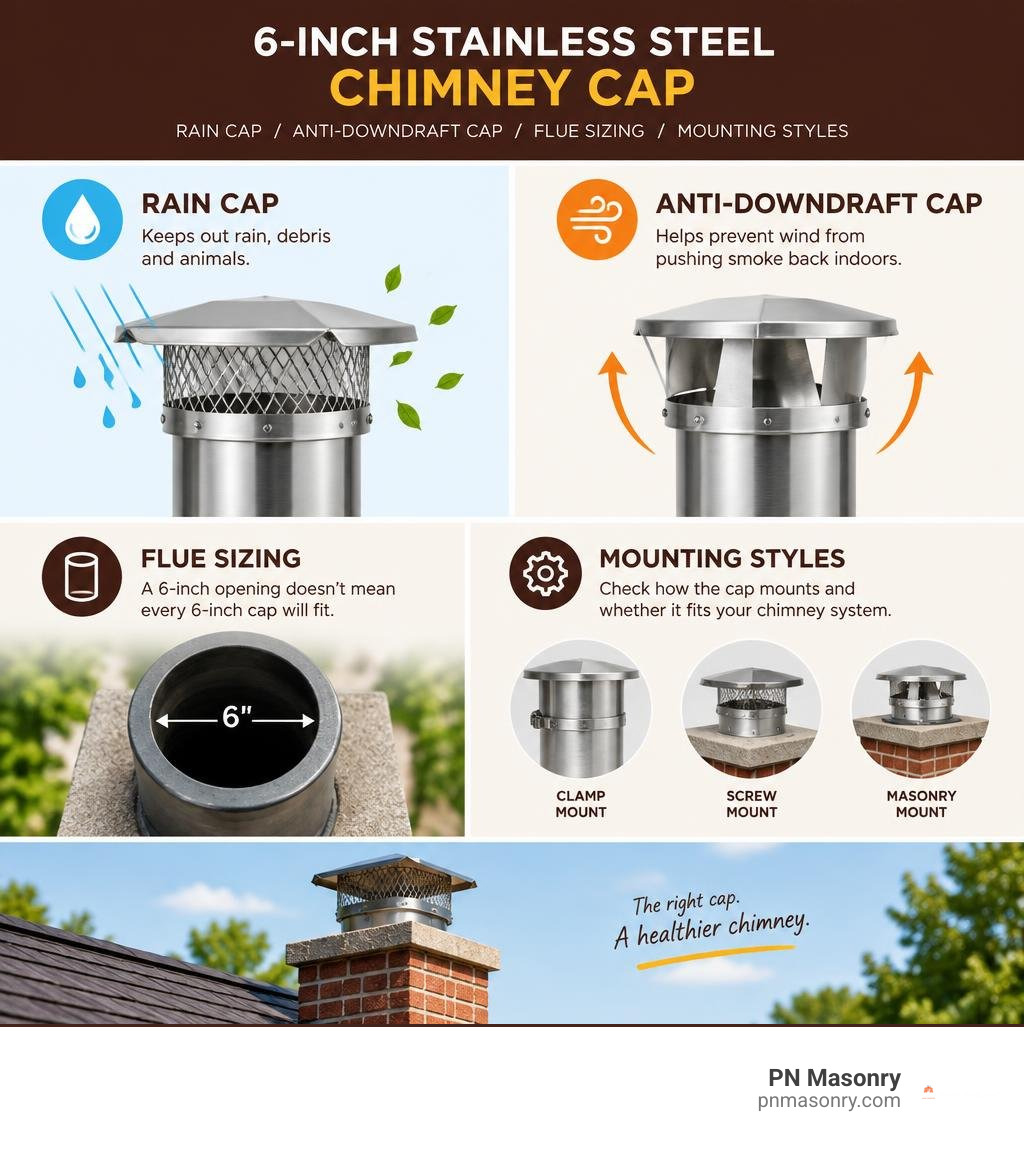
Quick 6 stainless steel chimney cap terms:
Core Types of 6 Stainless Steel Chimney Cap Designs
When selecting a protective termination for your flue, matching the cap’s aerodynamic profile and mounting mechanism to your venting conditions is paramount. Different venting applications—ranging from residential open-hearth fireplaces to high-efficiency wood stoves and commercial exhaust systems—require tailored solutions to manage weather exposure, exhaust gas velocity, and thermal output safely.
| Cap Category | Primary Application | Key Design Mechanism | Recommended Steel Alloy |
|---|---|---|---|
| Standard Cone Rain Cap | General venting, moderate climates | Deflection lid with open mesh perimeter | 304 or 304L Stainless Steel |
| Anti-Downdraft Cap | High-wind regions, coastal/mountain areas | Omni-directional venturi wind baffle | 304 or 316Ti Stainless Steel |
| Air-Cooled / Double-Wall Cap | Factory-built Class A & double-wall pipes | Dual-collar shield with thermal ventilation | 304 Stainless Steel |
| Multi-Flue / Custom Crown Cap | Masonry chimneys with multiple flues | Top-mount hood covering entire crown footprint | 304 or 316 Stainless Steel |
For insulated high-temperature venting, components like the 6″ DuraTech Chimney Cap, Stainless Steel, Double Wall – Forno Bravo. Authentic Wood Fired Ovens deliver UL103HT-rated thermal durability, engineered specifically to manage exhaust temperatures up to 2100°F without compromising structural integrity or corrosion resistance.
Standard Rain Caps vs. Anti-Downdraft 6 Stainless Steel Chimney Cap Models
The standard rain cap uses a simple conical or curved lid positioned above an open spark screen. This configuration sheds vertical precipitation effectively and provides an unobstructed pathway for rising flue gases. However, in regions subject to turbulent crosswinds, hillside topography, or adjacent tall structures, horizontal gusts can blow directly into the chimney mouth. This creates positive pressure that forces smoke, soot, and dangerous combustion byproducts backward into your living space.
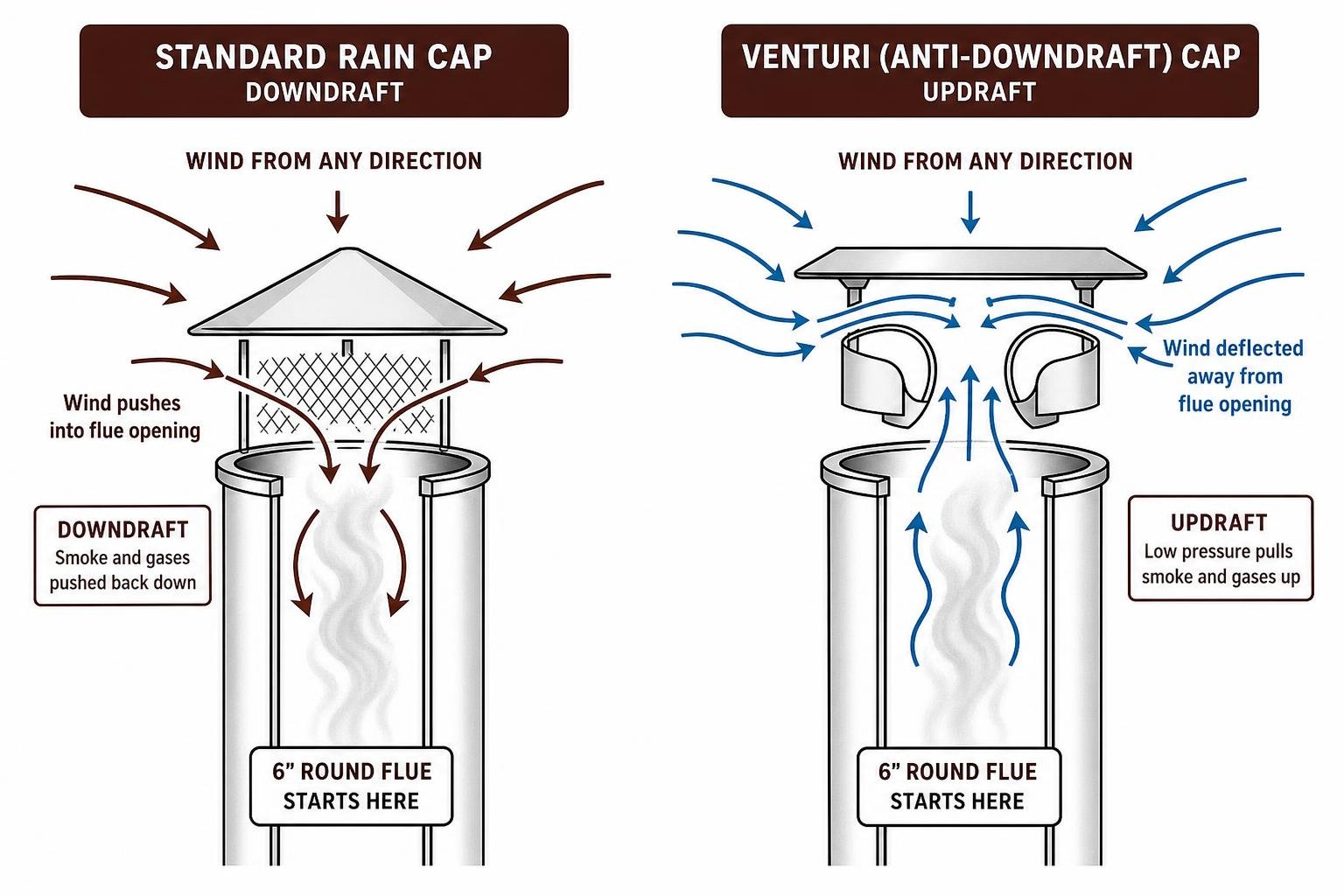
To solve these persistent draft problems, anti-downdraft systems utilize aerodynamic venturi mechanics. Specialized designs, such as the DIKAPT WIND-KING, incorporate an omni-directional wind baffle. As wind strikes the exterior housing from any direction, the internal baffles accelerate airflow across the top opening, creating a localized low-pressure zone (the Bernoulli effect) that actively pulls exhaust upward while redirecting driving rain safely away from the flue opening.
WeatherShield and Double-Wall Air-Cooled Terminations
Prefabricated metal chimneys present unique venting challenges. Air-cooled double-wall and triple-wall chimney pipes rely on continuous airflow between their metal casings to keep outer surface temperatures safe. Installing an unvented standard cap over an air-cooled system can trap excessive heat or allow wind-driven rain to enter the cooling channels, leading to internal rust and structural degradation.
Engineered solutions like WeatherShield Chimney Caps – First Response Fireplace utilize a specialized dual-collar design. The inner collar seals tightly against the 6-inch exhaust flue, while the outer spring-tension collar protects the surrounding air channel from water intrusion while allowing proper thermal venting. These precision units often feature removable hoods for easy sweeping access and comply with strict Class B and UL103HT factory-built fireplace standards.
Material Durability and Flue Compatibility
Not all stainless steel alloys behave identically in outdoor and high-heat environments. Standard 304-grade stainless steel is the industry benchmark for wood and pellet applications, offering outstanding resistance to moisture, rust, and thermal stress. For environments exposed to acidic condensation from high-efficiency gas boilers or coastal saltwater air, premium 304L or titanium-stabilized 316Ti alloys provide superior resistance against pitting and chemical degradation.
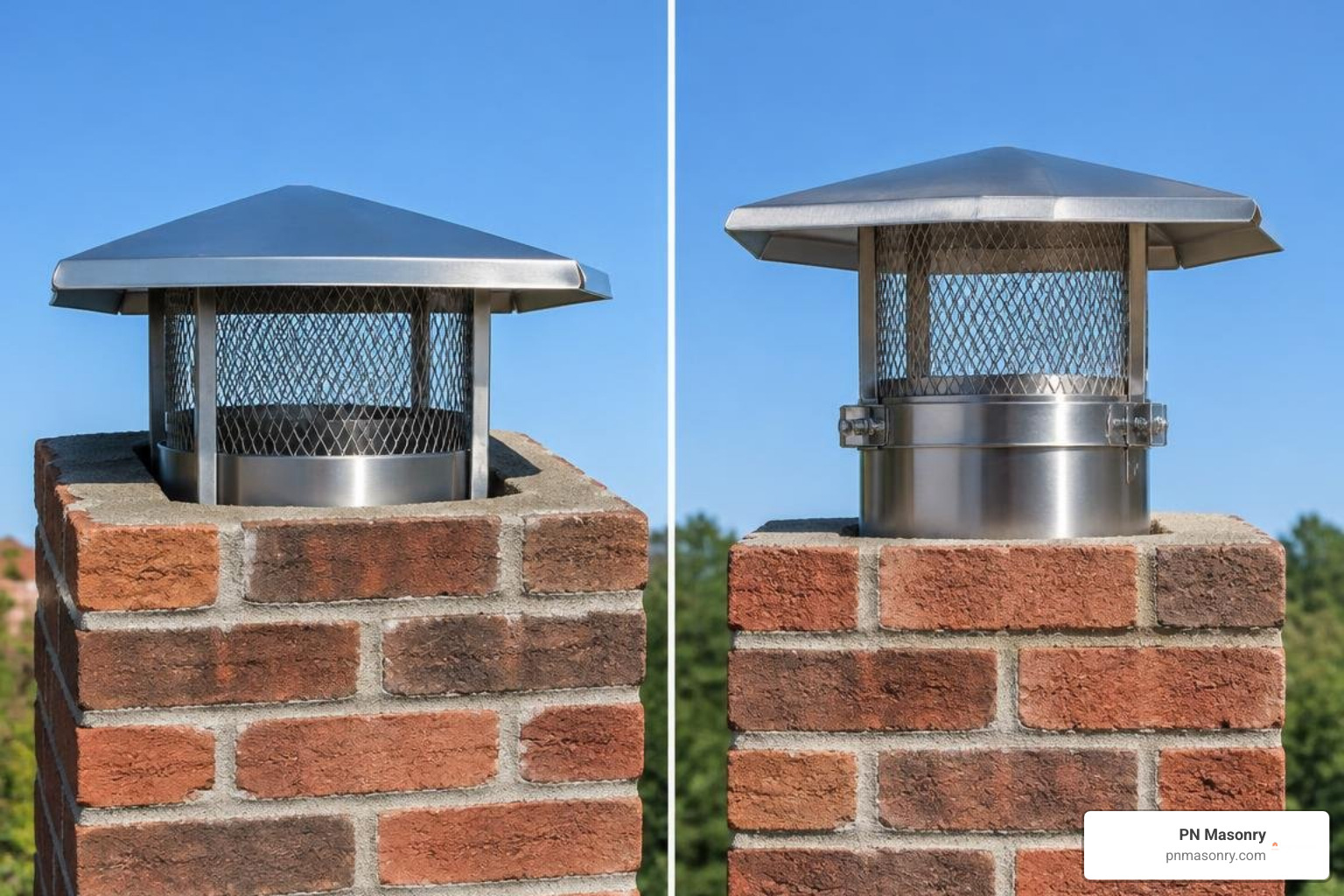
Material thickness is equally critical. Premium caps utilize heavy 26-gauge stainless sheet metal for the protective hood alongside an 18-gauge welded wire mesh. This heavy-duty gauge resists warping from flue gas heat cycles and prevents animal intrusion from raccoons, squirrels, and nesting birds. When evaluating options, consulting The Complete Guide to Choosing a Chimney Cap helps homeowners select the ideal material grade for their specific fuel source and climate conditions.
Inside-Mount vs. Outside-Mount Configurations
Achieving a secure, weather-tight installation depends on choosing the correct mounting configuration for your specific flue profile:
- Inside-Mount (Slip-Collar): Features a round cylindrical base that slides directly inside a 6-inch rigid or flexible metal liner. It creates a sleek, low-profile look and installs rapidly, but requires an unobstructed internal flue diameter.
- Outside-Mount (Clamp-On): Uses an external stainless steel band that tightens around the exterior perimeter of an exposed clay tile or round metal casing. This configuration leaves internal airflow completely unobstructed.
- Top-Mount / Bolt-On Brackets: Secures directly to the top edge of a protruding terra cotta tile or flat chimney crown using heavy-duty stainless tapcon screws or locking bolts. Requires at least 1.5 inches of protruding tile for solid mechanical anchoring.
Round Caps on Square or Rectangular Flues
Many traditional masonry chimneys feature rectangular or square clay flue tiles terminating at the chimney crown, even when venting appliances that utilize a 6-inch exhaust path. Installing a round 6-inch cap on an angular flue requires a stainless steel masonry adapter plate.
The adapter plate acts as a transition flange, featuring a flat outer plate (commonly 10×10 inches or 13×13 inches) that mounts over the masonry opening, with a raised central 6-inch collar to receive the round cap. During installation, applying a generous bead of high-temperature silicone caulking beneath the flange ensures a watertight perimeter seal. For complex multi-flue masonry crowns requiring custom flashing or structural reinforcement, professional chimney services ensure transitions remain leak-free through severe freeze-thaw cycles.
Sizing, Spark Arrestors, and Step-by-Step Installation
A properly designed chimney cap serves as an essential spark arrestor, catching burning embers before they land on flammable roof decking or surrounding dry vegetation.
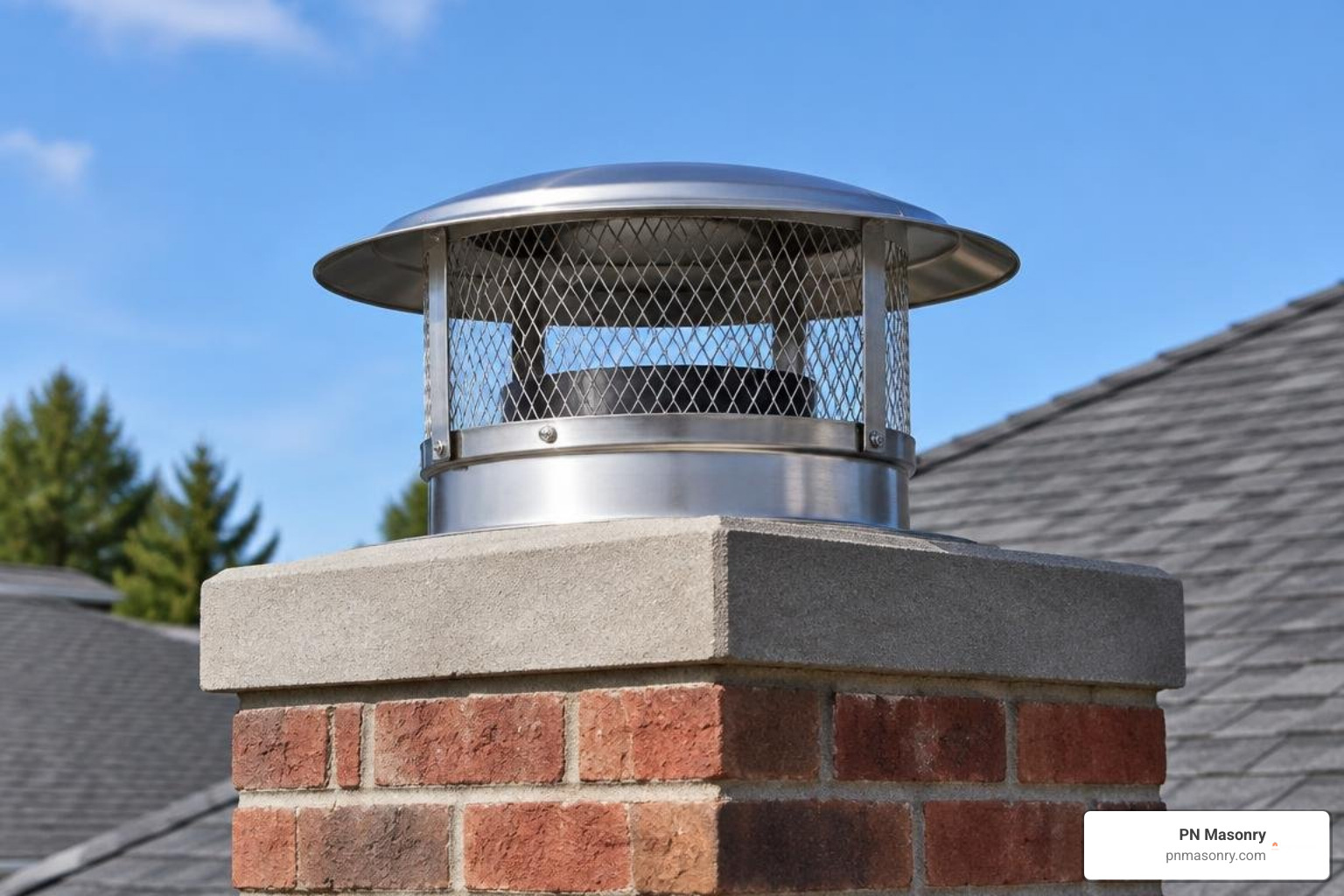
Screen mesh sizing requires balancing fire safety against airflow volume:
- 3/4-Inch Diamond Mesh: The standard residential standard across most regions. It provides exceptional spark containment, deters wildlife, and maintains high clog resistance against soot and creosote buildup.
- 1/2-Inch / 5/8-Inch Code Mesh: Mandatory in high-wildfire risk zones and states with strict regulations (such as California Building Code requirements). While providing superior ember suppression, smaller mesh requires regular visual inspections to prevent creosote bridging from choking appliance draft.
For streamlined venting and straightforward maintenance, products like the 6″ Rain Cap, Stainless Steel by Z-Flex. combine integrated spark mesh with low-profile rain hoods backed by comprehensive 25-year manufacturer warranties.
Step-by-Step Installation for a 6 Stainless Steel Chimney Cap
Installing a round stainless steel chimney cap can be completed safely with basic tools by following this structured process:
- Verify Dimensions and Clearances: Measure the inside and outside diameter of the flue pipe or clay tile to confirm a 6-inch fit. Ensure proper vertical clearance between the top of the flue and the cap hood (typically 5 inches minimum) to avoid restricting exhaust gases.
- Inspect and Prepare the Crown: Examine the underlying masonry. If the concrete crown shows spalling, cracks, or moisture intrusion, complete necessary chimney crown repair before installing top-mounted hardware.
- Dry-Fit the Cap: Slide the slip-collar into the flue or position the clamp-on base over the exterior pipe. Check that the unit sits perfectly level to prevent uneven rainwater drainage.
- Fasten Mechanically: For slip-fit designs into Class A pipe, secure the base using the manufacturer’s twist-lock mechanism or corrosion-resistant self-tapping stainless steel sheet metal screws. For clamp-on models, tighten the exterior draw band evenly until snug.
- Apply Weatherproof Sealant: Where base flanges meet flat masonry or top plates, apply a continuous bead of high-heat neutral-cure silicone sealant along the outer junction to prevent water from wicking beneath the cap.
Price Ranges and Warranty Expectations
A high-quality 6-inch stainless steel chimney cap ranges in price from approximately $55 to over $400, depending on design complexity, material gauge, and engineering certifications:
- Budget / Standard Caps ($55 – $110): Basic single-wall rain caps constructed from standard 304 stainless steel with clamp or friction fittings. Suitable for straightforward venting needs and standard climate zones.
- Mid-Range Performance Caps ($115 – $230): High-flow models, heavy-gauge 18-gauge screened caps, and specialized anti-downdraft units (such as Vacu-Stack models). Ideal for high-wind exposure and multi-fuel wood appliances.
- Premium / Engineered Caps ($240 – $400+): Commercial-grade UL103HT double-wall insulated caps, 316Ti marine-grade assemblies, and specialized air-cooled WeatherShield systems with modular cleanout hoods.
Reputable manufacturers back stainless steel chimney caps with 25-year to limited lifetime warranties against rust-through and manufacturing defects, representing a permanent upgrade over galvanized steel alternatives that frequently deteriorate within 3 to 5 years.
Frequently Asked Questions About 6-Inch Chimney Caps
How do I know if my chimney requires a 6-inch cap size?
To confirm sizing, measure the internal diameter of your round metal chimney pipe or clay flue liner. A 6-inch cap is designed to interface with a flue that measures exactly 6 inches across the inside opening. If you have a double-wall or triple-wall Class A chimney, the inner exhaust liner will measure 6 inches, while the outer casing may measure 8 to 10 inches across. Always ensure you purchase a cap engineered to mount correctly to your specific pipe type and outer diameter.
Will a stainless steel chimney cap restrict airflow or draft?
No, a correctly sized 6-inch chimney cap is engineered to maintain or improve draft. Standard caps provide an open perimeter screen area that exceeds the cross-sectional area of the 6-inch flue pipe, ensuring completely unobstructed exhaust flow. Furthermore, anti-downdraft and venturi models actively enhance updraft by leveraging passing outdoor wind currents to pull gases out of the flue.
Why choose 304 or 316 stainless steel over galvanized steel?
While galvanized steel caps are less expensive initially, their thin zinc coating quickly breaks down under the corrosive combination of high thermal cycles, acidic wood smoke, and outdoor moisture. Once the coating degrades, galvanized caps rust rapidly, staining roof shingles and masonry with unsightly streaks. Stainless steel (grades 304, 304L, and 316) is rust-proof, withstands intense chimney fires up to 2100°F without burning through, and provides decades of maintenance-free performance.
Conclusion
Protecting your chimney flue with a high-grade stainless steel cap is one of the most cost-effective investments you can make to safeguard your heating appliances and home structure. A durable cap prevents thousands of dollars in water damage, keeps nesting wildlife outside, eliminates downdraft smoke, and ensures your fireplace or stove operates with optimal thermal efficiency.
Whether you are retrofitting an existing brick chimney, replacing a rusted factory termination, or completing a seasonal masonry inspection, our team delivers complete commercial and residential masonry care. For comprehensive maintenance, custom flashing, and expert chimney and masonry solutions, choose professional service built to withstand every season.