
Essential Functions of a Chimney Cap
Choosing the right chimney cap starts with three practical decisions: measure your flue tile or crown dimensions, match the cap style to your flue configuration, and select a durable material such as 304 stainless steel or copper. For a single exposed clay flue, a clamp-on cap sized to the outside tile dimensions is usually sufficient. For multiple flues sharing one crown, a multi-flue cap provides broader coverage and a cleaner roofline. Once you have those measurements and material preferences in hand, the rest of the selection process becomes much simpler.
When you look at your roofline, the chimney stands as the most exposed architectural element of your home. Rain, hail, driving winds, and freezing temperatures beat down on it continuously. Without a durable barrier on top, your open chimney flue acts essentially like a vertical storm drain leading straight into your living space.
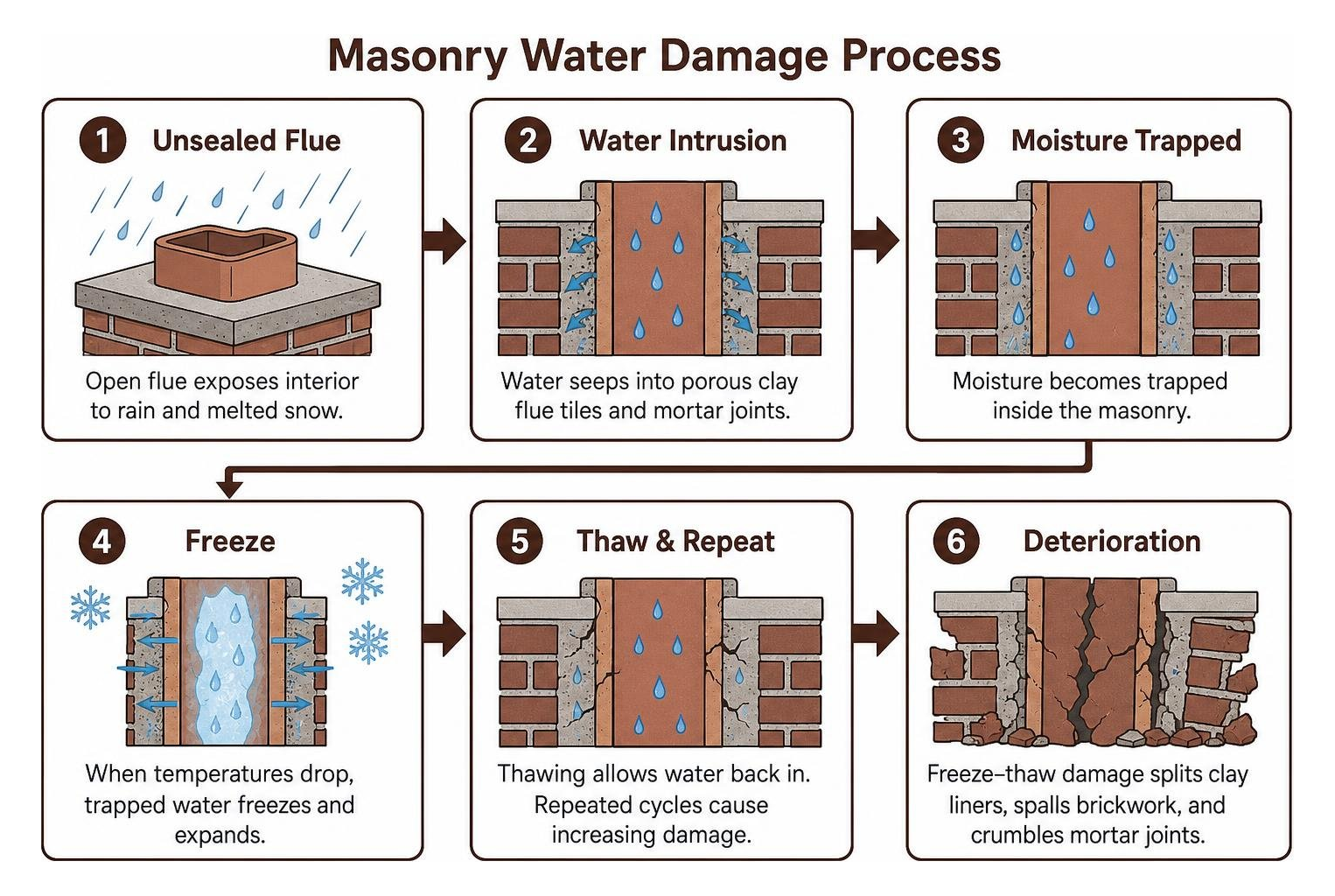
Water intrusion is by far the most destructive force a masonry structure faces. When rain and melted snow enter an uncapped flue, water seeps into porous clay flue tiles and surrounding mortar joints. In colder regions where temperatures routinely swing across the freezing mark, trapped moisture expands as it freezes. This relentless freeze-thaw cycle splits clay liners, spalls interior brickwork, and causes the masonry joints to crumble from the inside out.
Installing a protective topper preserves the internal liner, shields delicate metal dampers from rusted seizure, and keeps firebox walls structurally sound.
Weather Protection and Animal Exclusion
Beyond stopping direct rainfall, an effective chimney topper serves as an active wildlife deterrent. Chimney cavities mimic hollow trees, making them prime real estate for birds, raccoons, bats, and squirrels looking for warmth or a safe place to build a nest.
When animals take up residence inside your flue, they bring along twigs, leaves, and flammable nesting debris. This nesting material creates dangerous blockages that prevent toxic gases from venting safely. Furthermore, animals frequently become trapped and perish inside flues, causing distressing noises, insect infestations, and foul odors. A properly engineered cap with perimeter mesh provides an impenetrable physical pest barrier, keeping wildlife out in the trees where they belong.
Spark Arresting and Downdraft Prevention
During active fireplace use, burning wood releases airborne embers and sparks up the flue. Without a spark arrestor screen, these burning embers can exit the chimney top and land directly on dry roof shingles, surrounding foliage, or neighboring properties, creating a severe fire hazard.
In addition to catching hazardous embers, the solid lid design deflects erratic crosswinds blowing over your roof. When strong wind gusts hit an open chimney top, they can push exhaust smoke back down the flue into your living room—an issue known as backdrafting. Deflecting these gusts stabilizes the pressure differential inside the flue, promoting steady upward draft.
If your hearth has already suffered from water staining or structural decay due to an unprotected chimney top, exploring expert fireplace restoration can help return your firebox and surround to peak safety and beauty.
Do Unused Chimneys Need Protection?
Homeowners often ask whether an unused or decommissioned fireplace flue still requires a top covering. The short answer is an unequivocal yes.
Even if you never strike a match, an open chimney remains an open hole into your home’s structural framing. Rainwater entering an unlit flue will saturate the soot and ash remaining on chimney walls, creating an acidic, corrosive paste that eats through mortar and emits an acrid smell through closed fireplace doors. Debris accumulation over several seasons can also trap humidity within the chimney column, accelerating hidden structural decay behind your drywall. Spending modest money on a protective cap saves thousands of dollars in avoidable masonry repairs down the line.
Key Styles, Mounts, and Lid Configurations
Every chimney is built with specific dimensions, flue counts, and architectural details. Selecting the right physical design ensures your chimney vents properly while offering complete coverage against the elements.
Single-Flue vs. Multi-Flue Chimney Cap Designs
- Single-Flue Caps: Designed to fit over an individual clay flue tile that extends 1 to 2 inches above the concrete chimney crown. These caps use side-mounted tension screws or clamp bands to grip the exposed tile. For metal liners or round masonry openings, products like a 9 in. Round Clamp-On Single Flue Liner Chimney Cap in Stainless Steel clamp directly to the pipe perimeter without drilling into the crown.
- Multi-Flue Caps: If your chimney contains several flues (such as separate vents for a living room fireplace, a basement stove, and a utility furnace), installing multiple individual caps can create a cluttered look and may cause overlapping hardware issues. Multi-flue caps feature an expansive footprint that bridges across all flue openings at once, shielding the entire crown under a unified metal canopy.
Top Mount vs. Outside Mount Installations
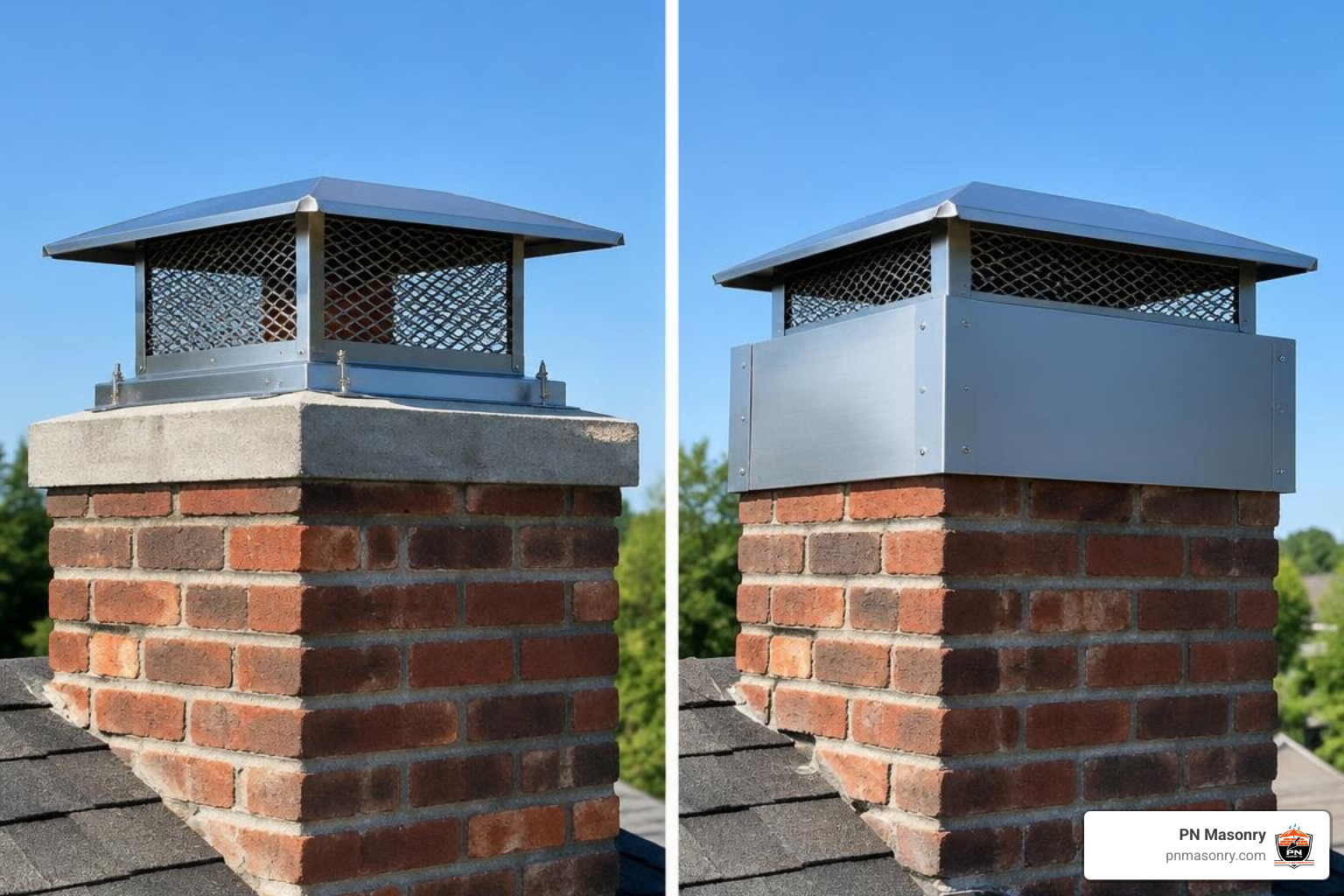
When selecting a multi-flue unit, you must choose between two distinct mounting styles:
- Top Mount: Features mounting flanges that turn inward or outward along the bottom edge, resting directly on the horizontal flat surface of the concrete crown. These are secured by drilling pilot holes into the masonry and driving in heavy-duty concrete anchors with weatherproofing sealant.
- Outside Mount: Features vertical side skirts that drop down over the exterior sides of the brick or stone chimney structure, gripping the outside perimeter. This approach covers the edge of the crown completely, shielding the crown perimeter from driving rain.
If your concrete crown already shows signs of flaking, horizontal cracking, or missing mortar, securing a cap directly to it can accelerate structural deterioration. Performing professional chimney crown repair prior to installing a top-mounted cap ensures a solid, weatherproof foundation for your anchors.
Flat Lids vs. Hip and Ridge Lids
The architectural profile of the metal hood influences both water shedding and aesthetic appearance:
- Flat Lids: Built with cross-broken diagonal creases pressed into the sheet metal to give the surface slight stiffness and guide water toward the edges. While cost-effective, flat lids can allow heavy snow to accumulate directly over the flue opening during major winter storms.
- Hip and Ridge Lids: Feature a peaked, pitched center ridge that slopes downward toward the corners. This geometric roof pitch sheds heavy snow and sheets of driving rain rapidly, minimizing standing moisture and offering enhanced resistance against wind-driven precipitation.
Cap Designs vs. Chase Covers
It is crucial not to confuse a standard masonry cap with a chimney chase cover (or chase pan):
- Chimney Caps: Engineered primarily for site-built masonry chimneys with concrete crowns. They cover the flue opening or mount atop the crown, leaving the surrounding brick structure open to breathe.
- Chase Covers: Large, fitted metal pans designed specifically for wood-framed chimney chases finished with wood, vinyl siding, or stucco (commonly found on prefabricated zero-clearance fireplace installations). The chase cover wraps over the entire top perimeter like a shoebox lid to keep water from leaking into the timber chase cavity below.
If you suspect moisture is entering lower down around your roofline where the masonry meets the shingles, prompt chimney flashing repair is vital to stop hidden framing rot.
Material Options, Durability, and Maintenance
Choosing the correct material ensures your chimney hardware will not rust out prematurely or leave unsightly orange streaks running down your brickwork.
| Material Type | Average Lifespan | Rust Resistance | Maintenance Needs | Relative Cost |
|---|---|---|---|---|
| Galvanized Steel | 5 – 10 Years | Moderate (Vulnerable over time) | Regular painting / Rust checks | Budget-Friendly |
| 304 Stainless Steel | 25 – 50+ Years | Excellent | Periodic soot / Mesh cleaning | Mid-Range |
| Copper | 50 – 100+ Years | Superior (Corrosion-proof) | Minimal (Develops natural patina) | Premium |
Stainless Steel, Galvanized Steel, and Copper Comparisons
- Galvanized Steel: Made of steel coated in a thin layer of zinc and often finished with a black powder coat, such as the 10 in. x 10 in. x 8 in. H Chimney Cap in Black Galvanized Steel or wider footprints like the 37 in. x 15 in. x 8 in. H Chimney Cap in Black Galvanized Steel. While budget-friendly, once the protective coating is scratched or worn down by acidic flue gas, galvanized steel will rust, potentially staining the chimney.
- 304 Stainless Steel: The industry standard for long-term reliability. Stainless steel resists rust completely, withstands extreme thermal cycling, and tolerates exposure to coastal or industrial air. Investing in a 25 in. x 58 in. Fixed Stainless Steel Chimney Cap or a 28 in. x 31 in. Fixed Stainless Steel Chimney Cap provides a permanent, corrosion-free solution backed by robust manufacturer warranties.
- Copper: The gold standard for architectural elegance. Solid copper will never rust, withstands harsh environmental extremes, and gradually oxidizes from a bright penny sheen to a rich emerald-green patina over time. It is an exceptional choice for historic brick homes and high-end restorations.
Mesh Sizing Standards and Spark Arrestor Codes
The metal mesh wrapping around the side perimeter must balance animal exclusion with unrestricted draft:
- 3/4-Inch Mesh: The most common standard across most building jurisdictions. It stops squirrels, birds, and large pests while providing open area for smoke venting without rapid soot clogging.
- 5/8-Inch Mesh: Mandated in specific regions with elevated wildfire risks (such as sections of California) to prevent smaller sparks and embers from drifting into the open air. Because the smaller grid can accumulate creosote more rapidly, it requires more frequent visual inspection.
Fuel Compatibility for Wood, Gas, and Oil Systems
The type of heating fuel venting through your chimney dictates how aggressive the exhaust environment will be:
- Wood-Burning Systems: Produce volatile organic compounds and unburned hydrocarbons (creosote). Caps must withstand high heat spikes and feature removable lids so sweeping brushes can clean the flue without ripping the hardware off the roof.
- Natural Gas Appliances: High-efficiency gas furnaces vent acidic water vapor. This moisture will quickly corrode galvanized steel, making 304 or 316-grade stainless steel essential.
- Oil-Fired Furnaces: Produce heavy, sulfurous soot that binds to damp surfaces. Caps installed on oil flues need regular checks to ensure the mesh does not choke off furnace drafting.
Sizing, Measuring, and Installation Best Practices
An incorrectly sized cap can restrict draft, trap carbon monoxide in the home, or tear off during high wind conditions. Precision measurement is the foundation of a safe installation.
How to Measure for a New Chimney Cap
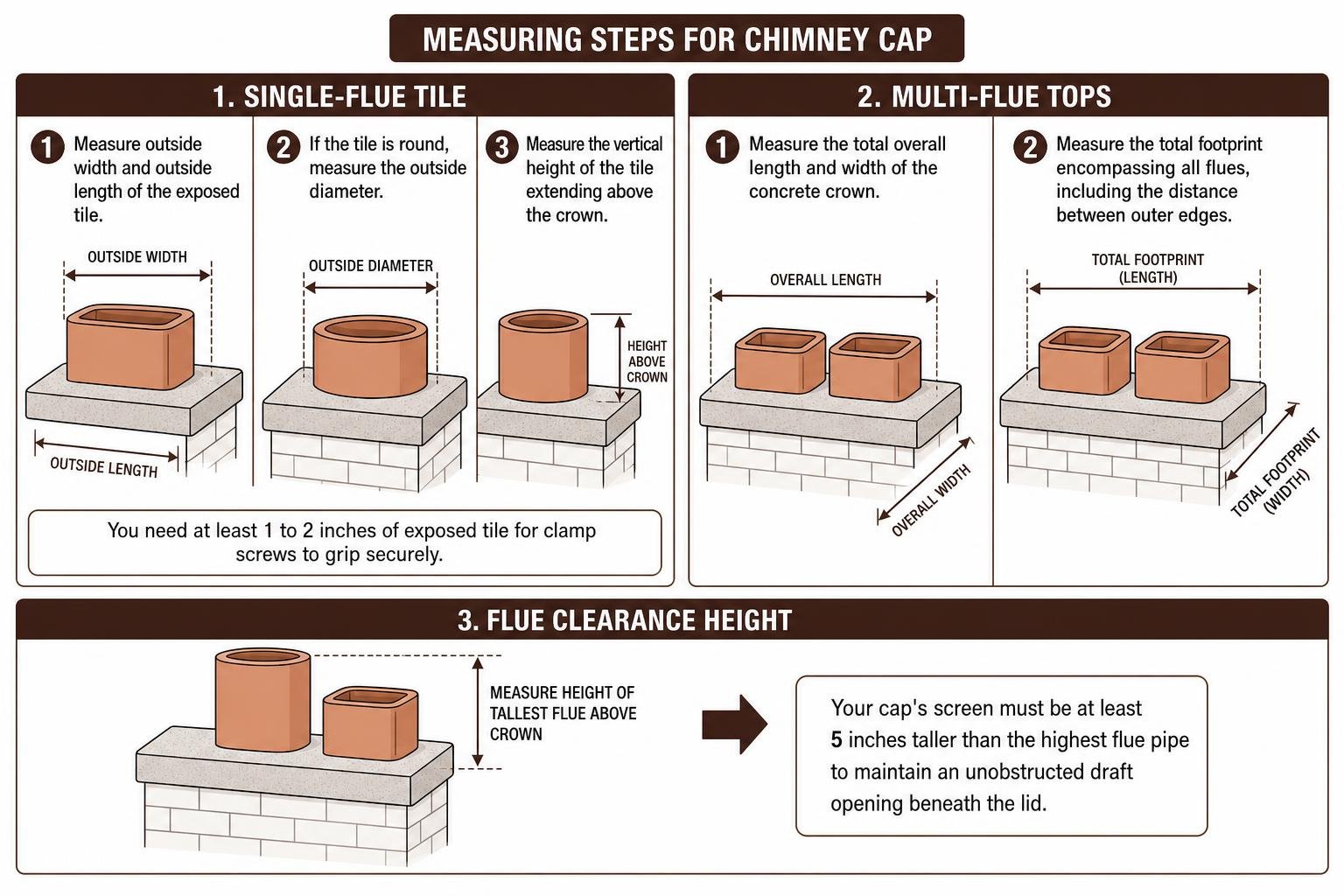
- For Single-Flue Tiles: Measure the outside width and outside length of the exposed clay tile. If the tile is round, measure the outside diameter. Next, measure the vertical height of the tile extending above the concrete crown; you need at least 1 to 2 inches of exposed tile for clamp screws to grip securely.
- For Multi-Flue Tops: Measure the total overall length and width of the concrete crown. Then measure the total footprint encompassing all flues, including the distance between outer edges.
- Flue Clearance Height: Measure the height of the tallest flue tile above the crown. Your cap’s screen must be at least 5 inches taller than the highest flue pipe to maintain an unobstructed draft opening beneath the lid.
DIY vs. Professional Installation Considerations
While clamping a single bracket onto an accessible flue may seem like an easy weekend chore, installing rooftop components carries genuine hazards. Steep roof pitches, slick shingles, and heavy metal assemblies present significant fall risks.
Working with professional chimney services ensures the assembly is leveled, mechanically fastened with masonry-grade tapcons, and sealed against weather using high-temperature industrial elastomeric compounds. Certified sweeps can also evaluate internal liner clearances and crown integrity in one single, safe visit.
Cost Expectations, Lifespan, and Warranties
- Standard Single-Flue Galvanized Units: Retail between $40 and $90. Expect a functional lifespan of roughly 5 to 10 years before rust spots appear.
- Single-Flue Stainless Steel Units: Range from $70 to $160, frequently backed by a lifetime warranty, offering 30+ years of maintenance-free service.
- Multi-Flue Caps (Stainless or Custom Sizes): Range between $250 and $700+ for materials depending on overall dimensions, with professional installation typically adding $150 to $400 depending on roof access and height.
- Custom Architectural Copper Assemblies: Range from $400 to well over $1,200 for custom-fabricated models.
If severe long-term water intrusion has already compromised the upper courses of your brickwork, simple capping may no longer be sufficient. In those cases, partial or complete chimney rebuilding is necessary to restore structural stability before securing new top hardware.
Frequently Asked Questions About Flue Protection
What are the main drawbacks or potential problems with flue covers?
The most common issue is poor maintenance leading to restricted exhaust flow. If a fireplace burns unseasoned, wet firewood, thick creosote and soot can form across the wire mesh screen. During freezing rain or heavy wet snow, ice can glaze over a soot-coated screen, choking off the draft and forcing smoke back into the living space. Choosing a quality cap with a removable hood makes periodic brush cleaning straightforward.
How often should a spark arrestor screen be cleaned?
Your spark arrestor screen and cap should be visually inspected and brushed clean at least once a year during your annual chimney sweep. If you use your wood-burning fireplace heavily as a primary heating source throughout the winter, check the mesh mid-season to confirm that soot buildup has not reduced airflow through the wire grid.
Can a damaged screen cause fireplace drafting problems?
Yes. A clogged, damaged, or undersized mesh screen significantly restricts the volume of exhaust air leaving the flue. This restriction causes sluggish combustion, smoky firebox spillage into the home, difficulty establishing a fire, and increased risk of carbon monoxide buildup inside living spaces. Ensuring an unobstructed, code-compliant mesh area restores proper upward draft.
Conclusion
A chimney cap is among the most cost-effective investments you can make to protect your home from moisture deterioration, costly masonry repairs, animal infestations, and accidental roof fires. Whether you choose a simple stainless steel clamp-on model or a hand-crafted multi-flue copper hood, keeping the top of your chimney sealed against the elements preserves your fireplace system for decades.
If you are dealing with chimney leaks, draft issues, or damaged brickwork, reach out to the experienced masonry professionals at PN Masonry to schedule an evaluation and safeguard your home today.