
Restore Your Chimney and Fireplace Before Small Damage Spreads
Chimney fireplace restoration brings an aging system back to a safe, usable condition by fixing damaged masonry, stopping water entry, restoring the firebox and flue, and preserving the fireplace’s original look where possible.
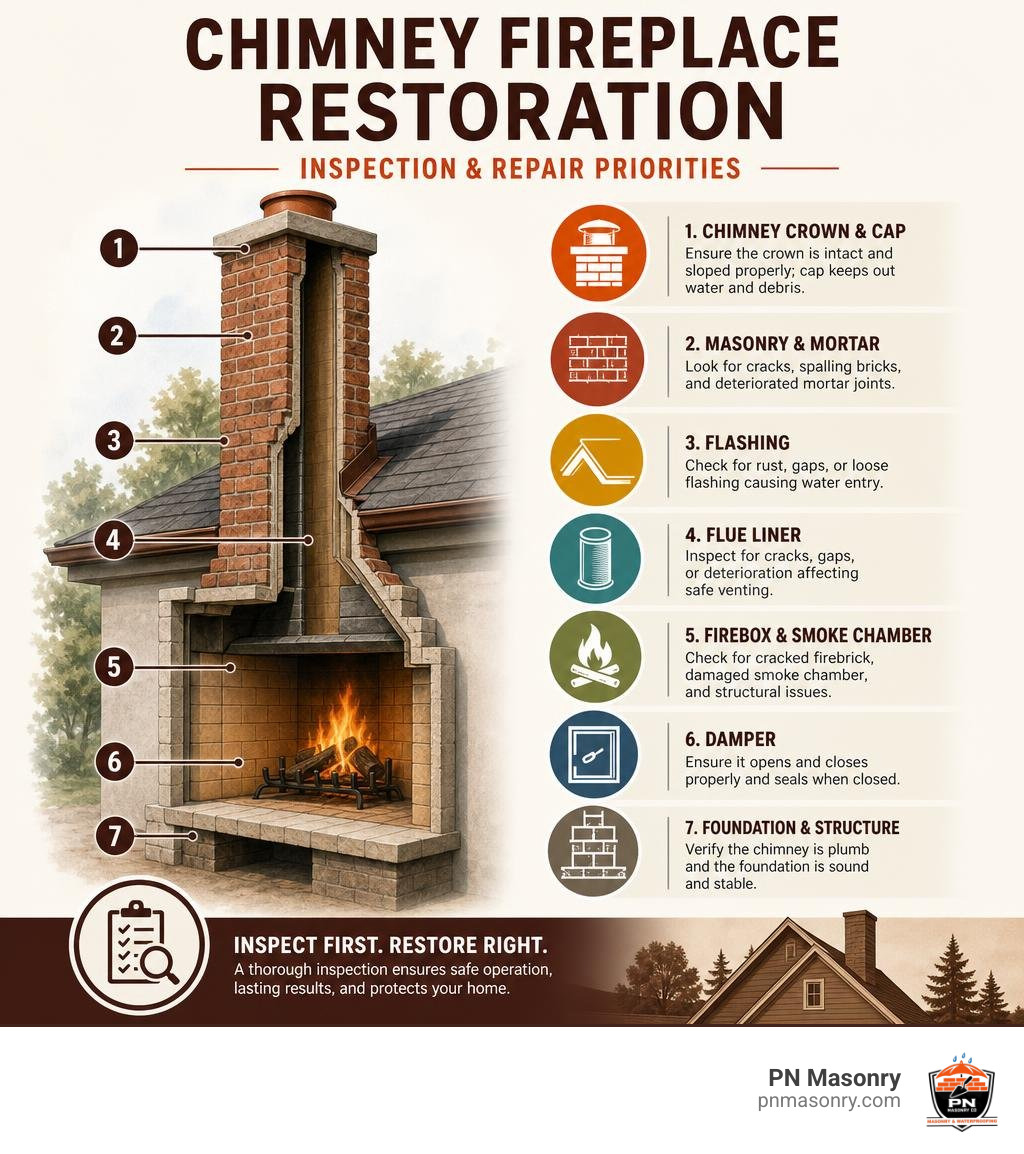
If you see cracked or missing mortar, flaking brick, stains near the chimney, a rusted lintel, smoke entering the room, or a fireplace that has sat unused for years, start with a professional inspection. The inspection should assess the chimney structure, firebox, damper, crown, flashing, and flue before cosmetic work begins.
For many Cook County homes, the right solution is more than patching a few joints. It may include repointing, compatible brick replacement, waterproofing that allows masonry to dry, structural rebuilding, or an interior flue liner that leaves the exterior chimney unchanged.
A well-planned restoration protects your home from ongoing moisture damage while helping an old fireplace become a safe focal point again.
Complete Guide to Chimney Fireplace Restoration vs. Basic Repair
When addressing masonry problems, it helps to distinguish between a temporary fix and a comprehensive overhaul. Standard repairs target isolated symptoms—patching a visible crack, resetting a loose hearth tile, or sweeping out creosote. While repairs keep a functional system running, they do not resolve underlying structural movement, chronic water infiltration, or deteriorated internal flue passages.
Complete restoration addresses the entire venting and masonry ecosystem from the foundation footing to the chimney pot. We examine how the firebox, throat, smoke chamber, structural stack, and exterior envelope interact under thermal stress and freeze-thaw cycles. Restoration brings outdated systems up to modern building codes and NFPA 211 fire safety standards without erasing their period character.
Homeowners considering updates can explore options for custom fireplaces and outdoor features to complement indoor masonry renovations.
| Factor | Basic Fireplace Repair | Complete Fireplace Restoration |
|---|---|---|
| Scope of Work | Localized (single crack, cap replacement, minor sweep) | Comprehensive (structural brickwork, relining, firebox, smoke chamber) |
| Primary Goal | Short-term safety patch or cosmetic touch-up | Decades-long structural integrity, code compliance, full functionality |
| Material Matching | Standard off-the-shelf mortars and bricks | Custom-formulated lime mortars, period-matched historic clay bricks |
| Typical Cost | $300 – $1,500 | $2,000 – $15,000+ depending on structural requirements |
| Expected Lifespan | 1 – 5 years | 30 – 100+ years with routine maintenance |
Evaluating Signs Your System Needs Restoration
Masonry degradation rarely happens overnight. Recognizing the warning signs early prevents minor joint failures from escalating into structural collapses:
- Spalling and Flaking Brickwork: When moisture gets trapped inside soft clay masonry and undergoes freeze-thaw cycles, the brick faces pop off (spall), turning the material to dust.
- Eroding Mortar Joints: Mortar that turns powdery, recesses deeply behind the brick face, or falls out in chunks leaves the masonry structure vulnerable to moisture and collapse.
- Rusted or Sagging Iron Lintels: The steel or iron lintel supporting the masonry above your firebox can rust, expand, and lift the surrounding brickwork, creating stair-step cracks across the chimney breast.
- Leaning Stacks and Roofline Separation: A chimney stack that pulls away from exterior framing indicates footing settlement, thermal expansion failure, or long-term water washout inside the chimney chase.
- Cracked Firebox refractory walls: Firebrick joints compromised by intense thermal shock allow open flames and combustible gases to reach hidden wall framing.
- Chronic Smoke Backdrafting: Smoke pouring into the living room often points to compromised flue geometry, broken clay tile liners, or a deteriorated smoke chamber.
For complex structural issues, planning comprehensive structural masonry overhauls ensures that major stabilization protects aging properties for decades to come.
Repointing vs. Rebuilding Structural Masonry
Deciding whether a chimney requires repointing or full reconstruction depends on the depth of masonry compromise.
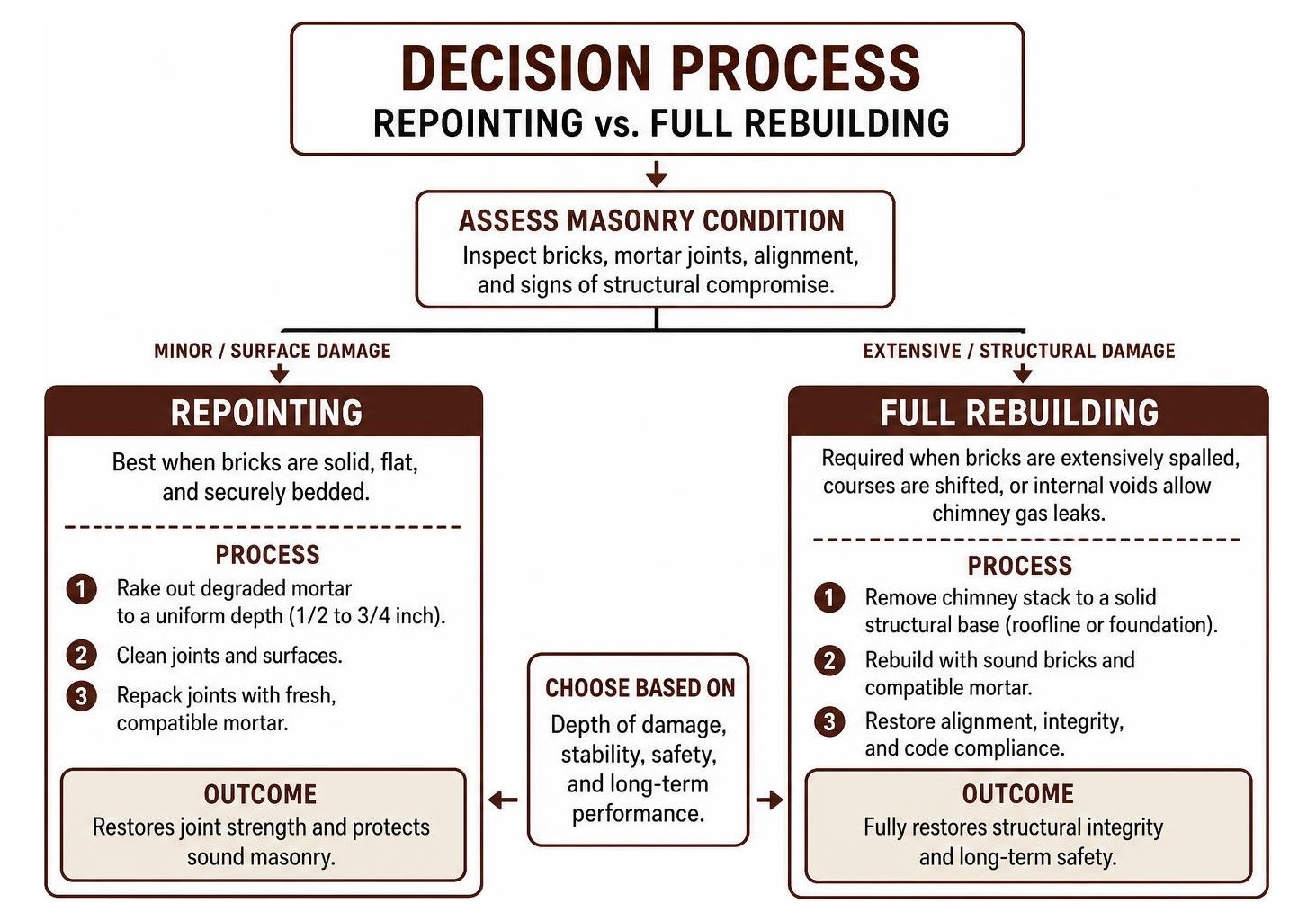
When the individual bricks remain solid, flat, and securely bedded, the chimney is an ideal candidate for repointing. This involves carefully raking out degraded mortar to a uniform depth (typically 1/2 to 3/4 inch) and repacking the joints with fresh, compatible mortar. Homeowners seeking high-precision joint restoration often rely on precision tuckpointing to restore both strength and clean architectural lines.
However, when bricks are extensively spalled, courses have shifted off plumb, or internal voids allow chimney gas leaks, repointing is no longer sufficient. In these cases, taking down the chimney stack to a solid structural base—often down to the roofline or foundation—and conducting a full rebuild is the safest path forward. For Cook County properties facing structural damage, our team provides complete brick chimney rebuilding to restore strength and architectural balance.
Historic Masonry Science: Mortars, Relining, and Waterproofing
Restoring pre-1900s, Federal, Victorian, or early 20th-century masonry requires an understanding of traditional building sciences. Unlike modern structures built with hard, modular, kiln-fired brick and dense cement, historic masonry systems were designed to be soft, flexible, and vapor-permeable.
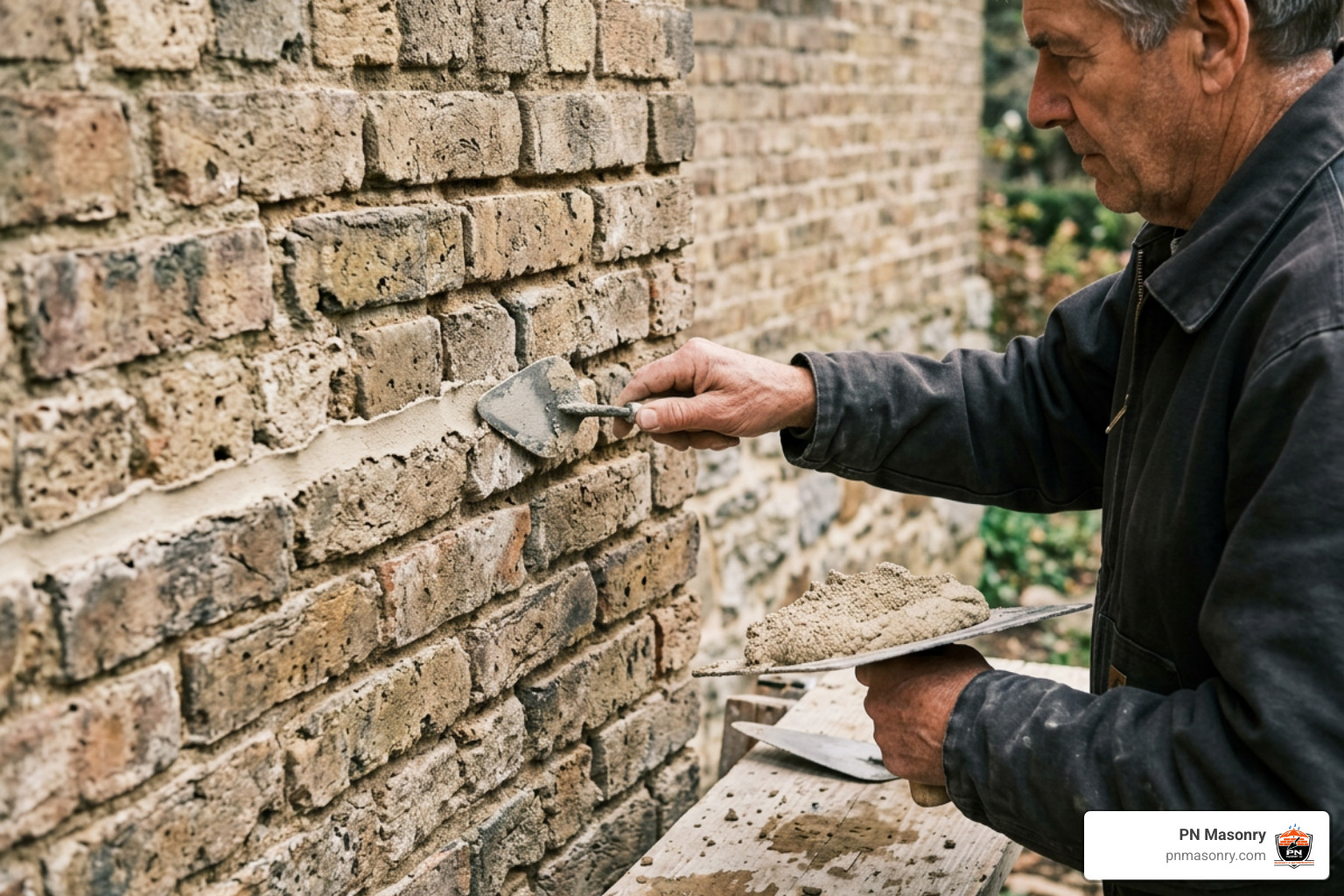
Applying modern commercial materials to historic chimneys often causes rapid structural failure. True preservation balances safety codes with traditional material chemistry.
Lime Mortar vs. Portland Cement in Historic Brickwork
The most common mistake in masonry restoration is using modern Type M or Type S Portland cement on vintage structures. Modern Portland cement dries exceptionally hard and forms an impermeable barrier. Historic bricks—molded by hand or low-fire pressed before the mid-20th century—are soft and porous.
When seasonal temperatures shift, the entire masonry stack expands and contracts. Because historic lime mortar is flexible (high in natural elasticity), it cushions the bricks and allows movement. If a hard Portland mortar is introduced, it refuses to give. The rigid mortar crushes the soft brick edges during thermal expansion.
Furthermore, modern cement traps water inside the wall. When winter freezing arrives, the trapped moisture expands, destroying the historic bricks from the inside out. Using custom-blended, vapor-permeable lime mortars preserves the soft brick, cushions structural movement, and lets the wall breathe naturally.
Concealed Relining Techniques for Historic Flues
Many older fireplaces were built with unlined brick flues or narrow rectangular passageways that do not accommodate standard round stainless steel pipes. When early chimney sweeps encounter these narrow offsets, they often declare the fireplace unfixable or recommend blocking it off with a modern insert.
Specialized restoration techniques solve this without damaging the exterior facade:
- Cast-in-Place Masonry Liners: A rubber bladder is lowered down the flue, inflated, and surrounded by a lightweight, insulating, structural refractory cement pumped from top to bottom. Once cured, the bladder is removed, leaving a seamless, fireproof, insulated flue that reinforces the original chimney walls from the inside.
- Custom Rectangular & Oval Stainless Steel Systems: Heavy-gauge, continuous stainless steel liners can be custom-formed to match the precise dimensions of narrow rectangular historic flues.
Some of these heavy-gauge liner assemblies exceed 500 lbs and require multi-person specialty crews and rigging equipment. By relying on internal relining, you protect the home from heat transfer while preserving the historic chimney exterior. For comprehensive venting evaluations, explore our full suite of comprehensive chimney services.
Breathable Waterproofing and Moisture Defense
Water is the primary enemy of chimney masonry. However, applying conventional silicone or film-forming sealants can ruin vintage brickwork. Film sealers form an impermeable plastic coat over the surface; while they shed falling rain, they trap rising damp and warm indoor vapor inside the brick, triggering rapid interior spalling.
Historic structures require 100% vapor-permeable, breathable silane/siloxane waterproofing treatments. These specialized sealers penetrate deep into the brick pores, creating a hydrophobic barrier against liquid rain while allowing moisture vapor to escape harmlessly.
Moisture defense also requires securing the top and base of the chimney stack. Cracked mortar crowns and failing perimeter roof flashing are primary conduits for interior water leaks. We recommend proactive chimney crown repair alongside meticulous chimney flashing repair to ensure complete, top-to-bottom weatherproofing.
Hearth Remodeling, Conversions, and Performance Upgrades
Restoration can also transform the interior hearth into an efficient, visually appealing gathering space.
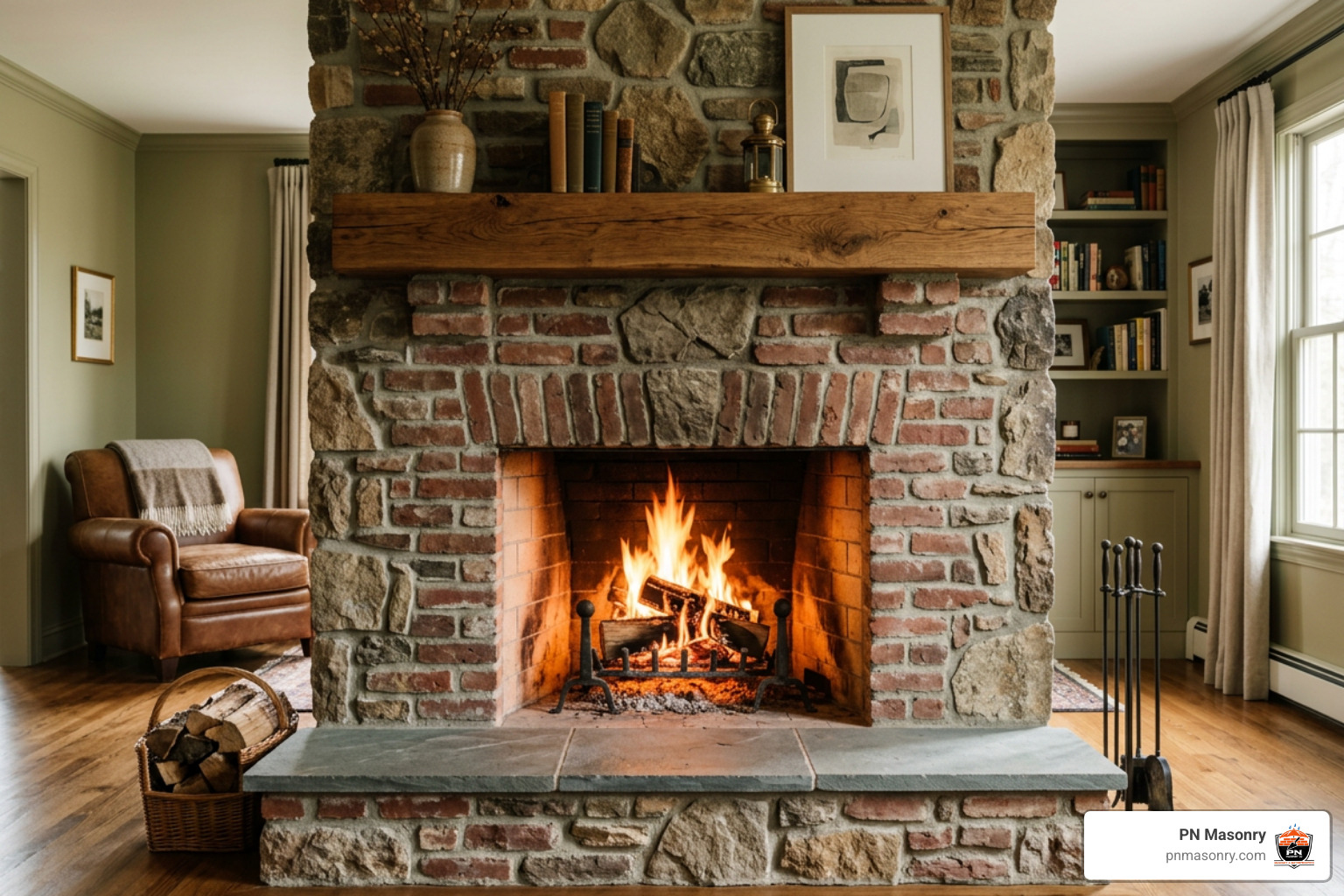
Whether you are restoring an abandoned open fireplace, updating an outdated 1970s surround, or revamping stone finishes, modern masonry techniques provide plenty of design flexibility. Homeowners can customize custom mantels, raised hearths, and stone refacing to integrate seamlessly with their living areas.
Rumford Conversions and Radiant Efficiency
Traditional early-American fireplaces were notoriously inefficient, losing up to 90% of their heat straight up the chimney flue while pulling conditioned air out of the room. A historic engineering solution often incorporated during restoration is a Rumford conversion.
Designed by Count Rumford in the late 18th century, this design reshapes the firebox:
- Shallow Depth: Pushes the fire forward into the room.
- Flared Canted Side Walls: Angled back-to-front to bounce radiant infrared heat into the living area.
- Streamlined Throat and Rounded Breast: Smooths airflow, eliminating turbulent eddies and smoke backdrafting.
A Rumford conversion transforms a drafty hearth into an efficient radiant heater without requiring mechanical inserts or losing open-fire aesthetics.
Restoring Open Hearths vs. Installing Inserts
When updating an aging fireplace, homeowners generally choose between preserving an open hearth or adding an insert:
- Open Hearth Restoration: Restores the classic sound, aroma, and look of a natural wood fire. It maintains the home’s historic integrity, preserves resale value among heritage property buyers, and retains the original masonry proportions.
- Gas or Wood Insert Installation: Sealed metal units fit directly into the existing firebox. While they provide higher heating efficiency and push heat with electric blowers, they change the fireplace’s open aesthetic and hide the original brickwork.
If a previous owner installed a metal insert that compromised the original masonry, we can reverse the installation, rebuild the damaged firebrick, repoint the throat, and restore the traditional open hearth.
Project Logistics: Execution, Timelines, and Costs
Executing a full chimney and fireplace restoration requires careful planning, specialized masonry equipment, dust containment, and site protection. Because historic bricks and custom mortars require precise temperature control and cure times, hiring a dedicated crew prevents project delays.
To view examples of completed restoration work, browse our completed project gallery.
The Step-by-Step Chimney Fireplace Restoration Process
A structured restoration follows a systematic workflow to ensure lasting safety:
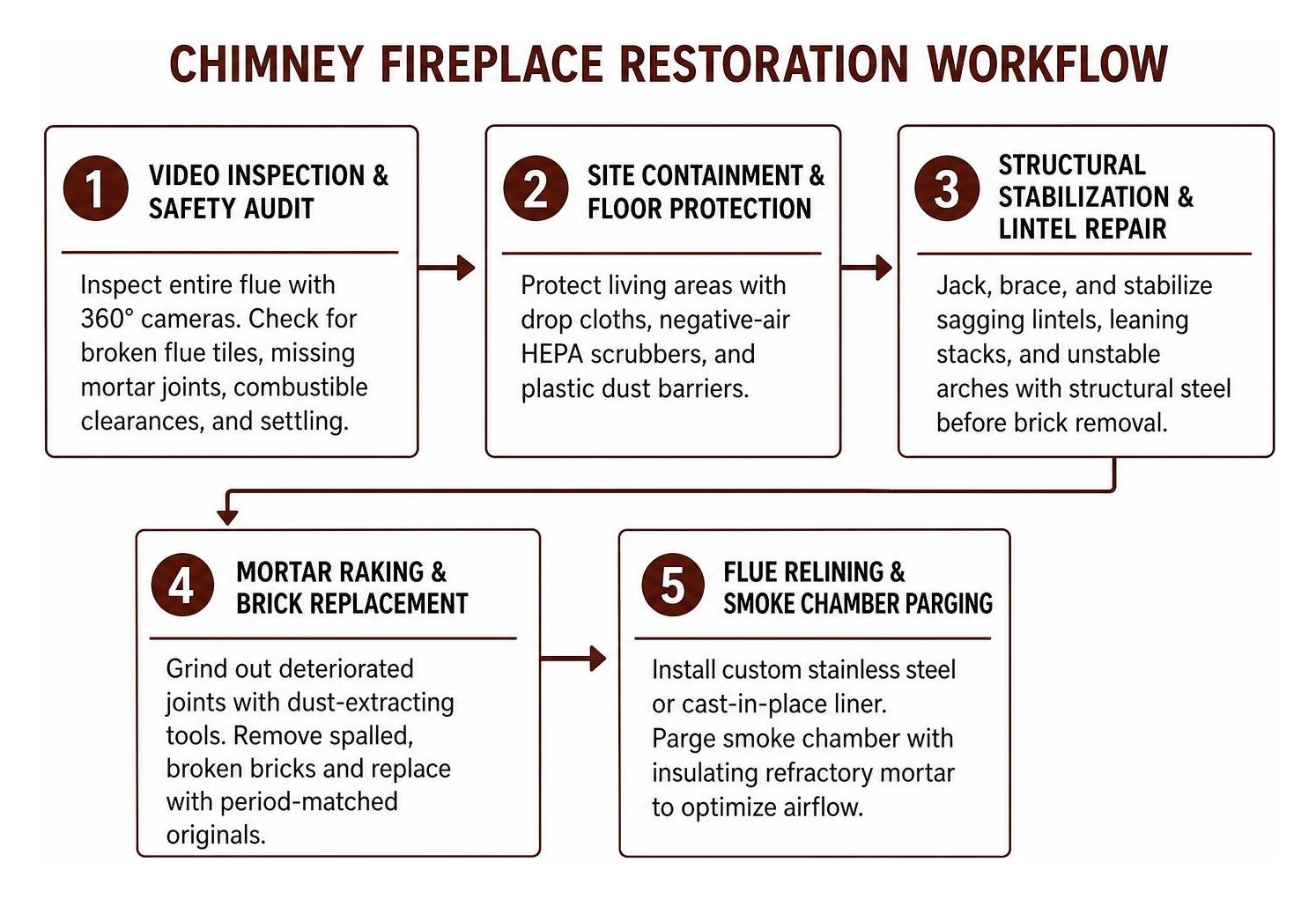
- Video Inspection & Safety Audit: We use high-resolution, 360-degree closed-circuit cameras to inspect the entire flue interior, checking for broken flue tiles, missing mortar joints, combustible framing clearances, and structural settling.
- Site Containment & Floor Protection: Masonry work generates dust. We protect your living area with heavy-duty drop cloths, negative-air HEPA scrubbers, and plastic dust barriers.
- Structural Stabilization & Lintel Repair: Any sagging lintels, leaning stacks, or unstable firebox arches are jacked, braced, and stabilized using heavy-gauge structural steel before brick removal.
- Mortar Raking & Brick Replacement: Deteriorated joints are ground out using dust-extracting tools. Spalled, broken bricks are removed and replaced with period-matched originals.
- Flue Relining & Smoke Chamber Parging: We install a custom stainless steel or cast-in-place liner, followed by smooth parging of the smoke chamber with insulating refractory mortar to optimize airflow.
- Firebox Reconstruction: We re-lay the firebox floor and walls using high-temperature refractory firebrick and specialized refractory mortar.
- Cosmetic Finishing & Draft Testing: We wash the brick surfaces, apply breathable water repellents, reinstall custom mantels, and conduct smoke tests to ensure clean drafts.
Cost Factors and Timelines for Chimney Fireplace Restoration
Restoration investments vary based on accessibility, chimney height, structural damage, and historic material sourcing:
- Cosmetic & Joint Restoration ($2,000 – $4,000): Focuses on firebox tuckpointing, minor brick replacement, smoke chamber parging, and hearth tile repairs. Typical timeline: 2 to 3 days.
- Comprehensive Structural Restoration ($5,000 – $15,000+): Includes full flue relining, rebuilding the chimney stack above the roofline, replacing structural lintels, and re-engineering firebox geometry. Typical timeline: 3 to 7 days.
- Extensive Historic Rebuilds ($15,000+): Multi-story teardowns, historic lime mortar matching, custom stone carving, and scaffolding across difficult rooflines can take 1 to 3 weeks.
Frequently Asked Questions About Chimney and Fireplace Care
Can a fireplace that has sat unused for decades be safely restored?
Yes. An unused fireplace should undergo an NFPA Level 2 inspection before being lit. Over decades of disuse, bird nests, collapsed flue tiles, dry rot in adjacent wood framing, or rusted throat dampers can create serious fire hazards. Once cleared, relined, and repointed, even a century-old abandoned hearth can function safely.
Will restoration change the exterior look of my historic chimney?
No. High-quality restoration maintains the original architectural lines. We source salvaged period-appropriate clay bricks, match the color and aggregate profile of historic lime mortars, and install internal flue liners completely out of sight.
How do I maintain a restored fireplace and chimney for long-term safety?
Schedule an annual inspection and sweep with a certified chimney professional. Burn only seasoned hardwoods (moisture content below 20%), avoid burning trash or treated lumber, keep the throat damper closed when not in use, and inspect the exterior crown and flashing seasonally for signs of moisture.
Conclusion
A damaged, drafty, or neglected fireplace is more than a design issue—it is an active safety risk and a prime entry point for water damage. By addressing structural vulnerabilities, matching period-appropriate lime mortars, and relining degraded flues, you preserve your property’s architectural character while keeping your home warm and safe.
Whether you need to stabilize a leaning stack, repair broken firebox joints, or plan a complete masonry overhaul, we are ready to assist. Cook County homeowners can count on PN Masonry for skilled service on both historic residential brick and commercial masonry. Contact us today to schedule your comprehensive chimney inspection and restoration consultation.