
Choosing the Right Stone Wall Water Seal for Masonry
The best stone wall water seal options are breathable penetrating silane/siloxane sealers and microporous silicone emulsions for exterior above-grade walls, and deep crystalline waterproofing systems for below-grade, subterranean moisture. Unlike film-forming sealers that trap moisture within the wall, penetrating sealers soak into the stone’s mineral pores to form an invisible hydrophobic barrier while remaining 100% vapor-permeable.
Selecting the right treatment depends on the physics of your stone. Natural stones—such as limestone, sandstone, granite, and fieldstone—possess varying capillary structures. When liquid water hits untreated masonry, capillary suction pulls moisture deep into the pores. In freezing climates, this trapped water expands by roughly 9%, generating internal hydraulic pressure that leads to spalling, cracking, and surface face loss.
To protect your exterior masonry, you must distinguish between penetrating water repellents, film-forming sealers, and structural waterproofing barriers.
| Sealer Category | Primary Chemistry | Surface Appearance | Vapor Permeability | Best Use Case | Typical Coverage |
|---|---|---|---|---|---|
| Penetrating Repellent | Silane / Siloxane | Invisible / Natural Flat | 100% Breathable | Exterior above-grade stone, chimneys, retaining walls | 100–150 sq. ft./gal (5–8 m²/L) |
| Microporous Emulsion | Alkyl Polysiloxane / Silicone | Invisible Clear Cure | High (Microporous) | Historic stone façades, damp-prone walls, render | 160–245 sq. ft./gal (4–6 m²/L) |
| Crystalline Slurry | Inorganic Crystalline / Cementitious | Solid Opaque Coating | Low to Medium | Retaining foundations, basement stone, subterranean walls | Varies by layer thickness (¾ inch) |
A proper brick block sealing waterproofing project should never compromise the wall’s ability to release internal moisture. Film-forming acrylics or heavy topical paints might seem appealing because they make water bead aggressively on day one, but they form a plastic-like sheet over the stone. Moisture rising from the foundation or finding its way through roof flashings becomes trapped behind that film, causing the face of the stone to blow off during winter freeze-thaw cycles.
Breathable Silane and Siloxane Penetrating Repellents
Silane and siloxane formulations represent the gold standard for above-grade exterior stone protection. These active compounds consist of tiny molecules that penetrate deep into the mineral pores of the stone and mortar. Once inside, they react with silica in the substrate to form an invisible, chemical hydrophobic barrier lining the pore walls without physically plugging them.
This cellular lining alters the surface tension of the stone capillaries. Liquid water droplets cannot enter because their surface tension is higher than the lined pore walls, yet water vapor molecules (which are significantly smaller than liquid droplets) pass through freely. Independent laboratory testing according to ASTM C67-87 demonstrates that high-grade silane/siloxane testing data confirms up to a 98.6% reduction in water absorption while maintaining 100% vapor permeability per ASTM D-1653-71 standards.
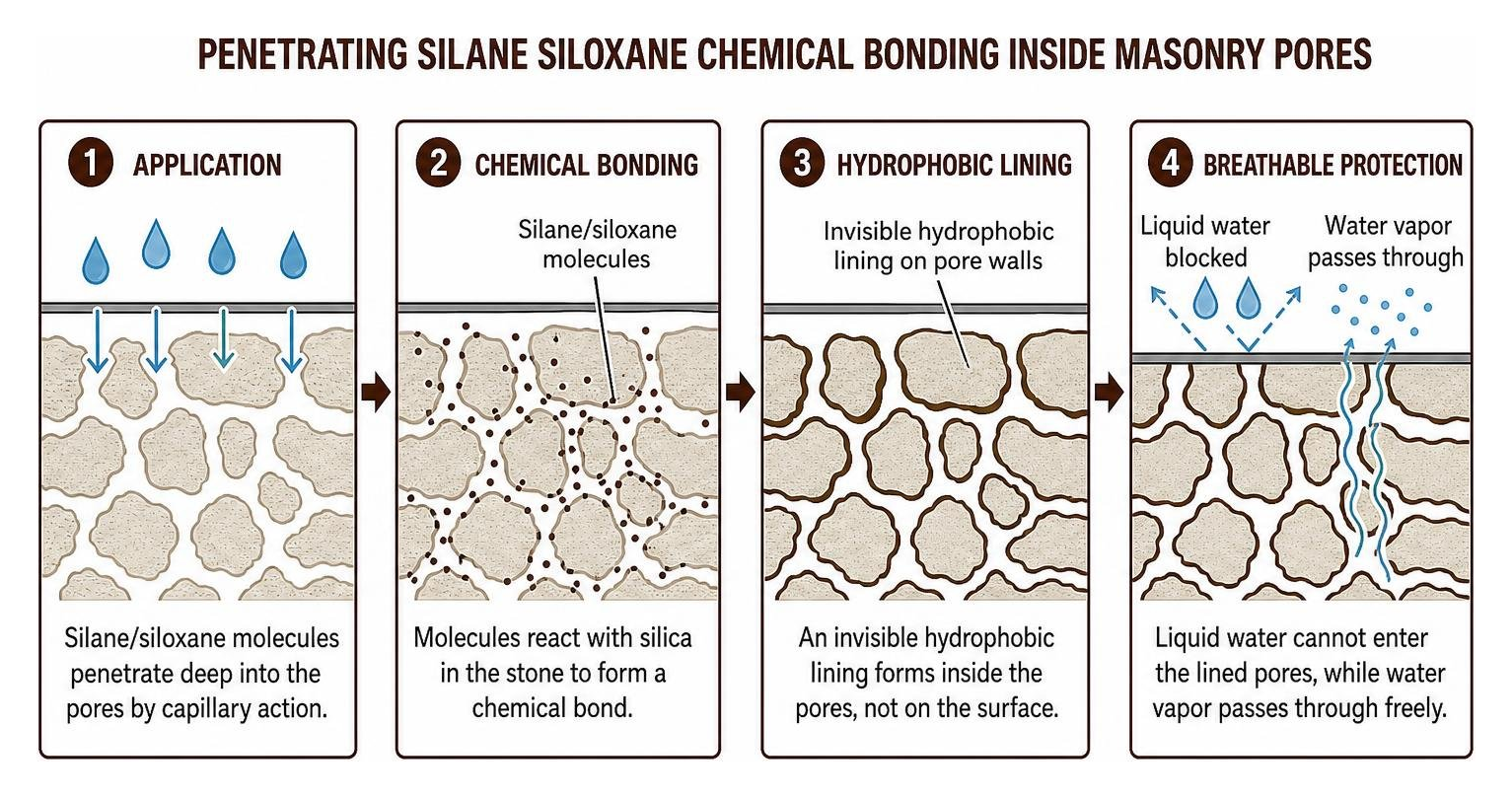
Modern silane/siloxane formulas feature advanced micro-molecular bonding additives that provide superior UV stability. Because the active ingredients reside beneath the stone’s surface rather than as an exposed top layer, the sun cannot degrade them quickly. These low-VOC (often under 15 g/L or zero-VOC) water-based concentrates reduce environmental runoff and are safe to apply near landscaping, children, and pets without leaving harsh chemical odors.
Microporous Polysiloxane and Silicone Micro-Emulsions
For structures subject to intense lateral damp or persistent driving rain, polysiloxane and silicone micro-emulsions offer exceptional moisture resistance. Products containing alkyl polysiloxane resins blend hydrophobic silicone polymers with micro-waxes to produce a breathable, microporous matrix across both stone and mortar joints.
According to technical benchmarks in microporous polysiloxane performance criteria, these specialized solutions significantly reduce capillary water uptake while minimizing evaporative heat loss through saturated walls. When masonry stays dry, the building maintains higher thermal efficiency and suppresses the colonization of algae, lichen, and moss spores that thrive on continuously damp mineral surfaces.
Furthermore, premium solvent-free water repellent specifications highlight that high-grade silicone micro-emulsions can often be applied over mineral substrates without altering their color, texture, or natural sheen. These products average spread rates of 4 to 8 square meters per liter (roughly 160 to 325 sq. ft. per gallon), depending on the porosity of the stone, delivering durable, invisible protection against wind-driven precipitation.
Deep Crystalline Waterproofing Systems
When dealing with severe negative-side water pressure—such as subterranean stone basement foundations, cellar vaults, or heavily loaded earth-retaining walls—a penetrating repellent applied to the interior surface will not stop hydrostatic pressure. In these situations, deep crystalline waterproofing systems provide a structural solution.
Crystalline formulations combine Portland cement, treated silica sand, and proprietary active chemicals. When applied as a slurry to a saturated mineral surface, the active chemicals react with free lime and moisture within the stone and mortar matrix. This reaction generates non-soluble, microscopic dendritic crystals that grow throughout the capillary tracts, permanently blocking the passage of liquid water.
As detailed in technical crystalline waterproofing standards, installing a crystalline system on older rubble-stone or brick walls often involves raking out deteriorated mortar joints to a depth of 1 to 1½ inches, applying crystalline repair mortars, installing mechanical mesh reinforcement pinned directly to the masonry, and topping the assembly with a structural crystalline coating (often applied at ¾-inch thickness). This creates a monolithic, pressure-resistant barrier designed to hold back high water tables.
Step-by-Step Preparation and Application Protocol
Applying a water repellent to an improperly prepped stone wall is like waxing a car covered in mud: it will fail to bond, seal in grime, and produce splotchy, uneven performance. Follow this professional workflow to achieve maximum chemical penetration and longevity.
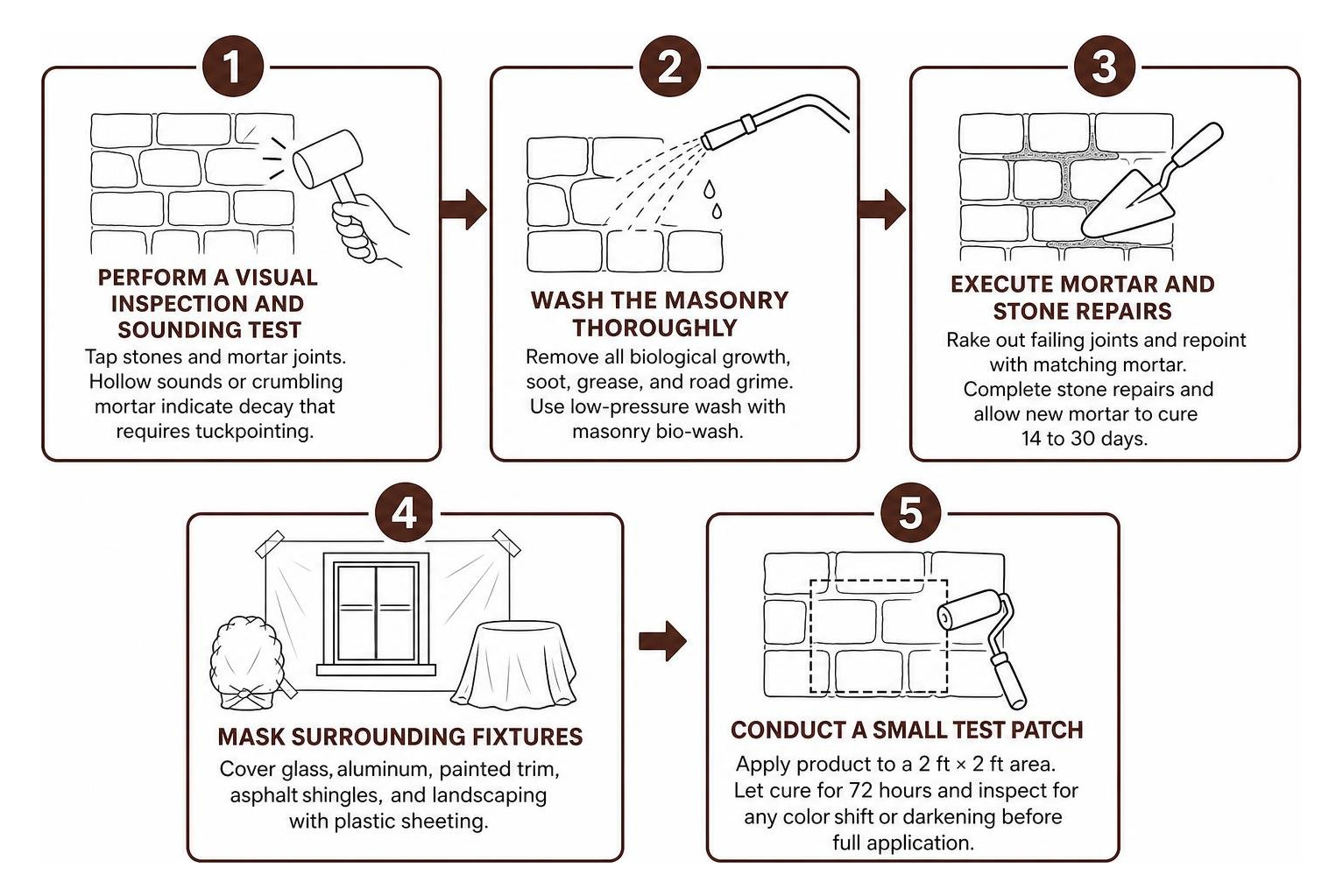
- Perform a Visual Inspection and Sounding Test: Walk the entire wall perimeter. Tap stones and mortar joints with a wooden mallet or screwdriver handle. Hollow sounds or crumbling mortar indicate structural decay that requires tuckpointing before sealing.
- Wash the Masonry Thoroughly: Remove all biological growth, airborne soot, grease, and road grime. Use a low-pressure wash paired with a specialized masonry bio-wash to neutralize embedded mold and lichen spores. Never use high-pressure blasting (over 800 PSI) on soft natural stone or historic lime mortar, as it can gouge the surface.
- Execute Mortar and Stone Repairs: Rake out failing, cracked, or loose mortar joints to a depth of at least twice the joint width. Repoint the joints using mortar matched in strength and flexibility to the existing assembly (e.g., lime-based mortar for historic stone; Type N or O mortar for softer stone units). For damaged stone façades or decorative accents, complete your stone veneer installation and repairs and allow all new mortar to cure for at least 14 to 30 days before applying any water repellent.
- Mask Surrounding Fixtures: Cover nearby glass, aluminum window frames, painted trim, asphalt shingles, and sensitive landscaping with plastic sheeting. Polysiloxanes and silanes can etch glass and leave stubborn marks on non-porous surfaces.
- Conduct a Small Test Patch: Choose an inconspicuous 2-foot by 2-foot area. Apply the product according to manufacturer instructions, let it cure for 72 hours, and inspect for any undesirable color shifts or darkening before completing the full project.
How to Properly Apply a Stone Wall Water Seal
Achieving an effective stone wall water seal requires thorough saturation rather than a light, dusting mist. To get the chemical deep into the pores, apply the product using a low-pressure garden pump sprayer (15–30 PSI), a deep-nap masonry roller, or a wide, natural-bristle masonry brush.
Work from the top of the wall downward, applying a flood coat so that a continuous “run-down” of approximately 6 to 12 inches flows beneath the spray nozzle. This ensures the fluid pools momentarily in surface voids and capillary fissures before soaking inward.
For dense or highly porous stone, utilize a wet-on-wet application technique. Apply the first saturation coat, allow it to soak in for 10 to 45 minutes (depending on temperature and ambient humidity), and apply the second coat while the wall is still slightly damp from the first pass. If you allow the first coat to cure completely, its newly formed hydrophobic barrier will repel the second coat, resulting in white residue and wasted material.
Ensure ambient air and surface temperatures remain between 40°F and 90°F (4°C to 32°C) during application and for at least 24 to 48 hours afterward. Avoid sealing in direct midday sun, which can cause water-based carriers to flash-dry before the active ingredients penetrate the substrate. Allow 24 hours of dry weather before the wall is exposed to heavy rain, with full chemical cure occurring over 4 to 5 days.
Can You Apply a Stone Wall Water Seal to Damp Surfaces?
One of the most common questions from property owners is whether stone walls must be bone-dry before application. The answer depends strictly on the carrier chemistry of your chosen product.
Traditional solvent-based repellents require a completely dry substrate with moisture content below 15%. If applied over a wet surface, solvent carriers become trapped, emulsion-clash with the moisture, and cure into an unsightly white haze that can only be removed via harsh chemical stripping.
Conversely, advanced water-based micro-emulsions and polysiloxanes can be applied to a Saturated Surface Dry (SSD) substrate. This means the stone is visibly damp and dark from recent rain or washing, but there is no standing or running film of water on the face. Because the carrier fluid is water, it blends with the moisture inside the stone’s capillary network, pulling the active silicone resins deeper into the wall structure. Always check your specific product data sheet to verify whether an SSD condition is acceptable.
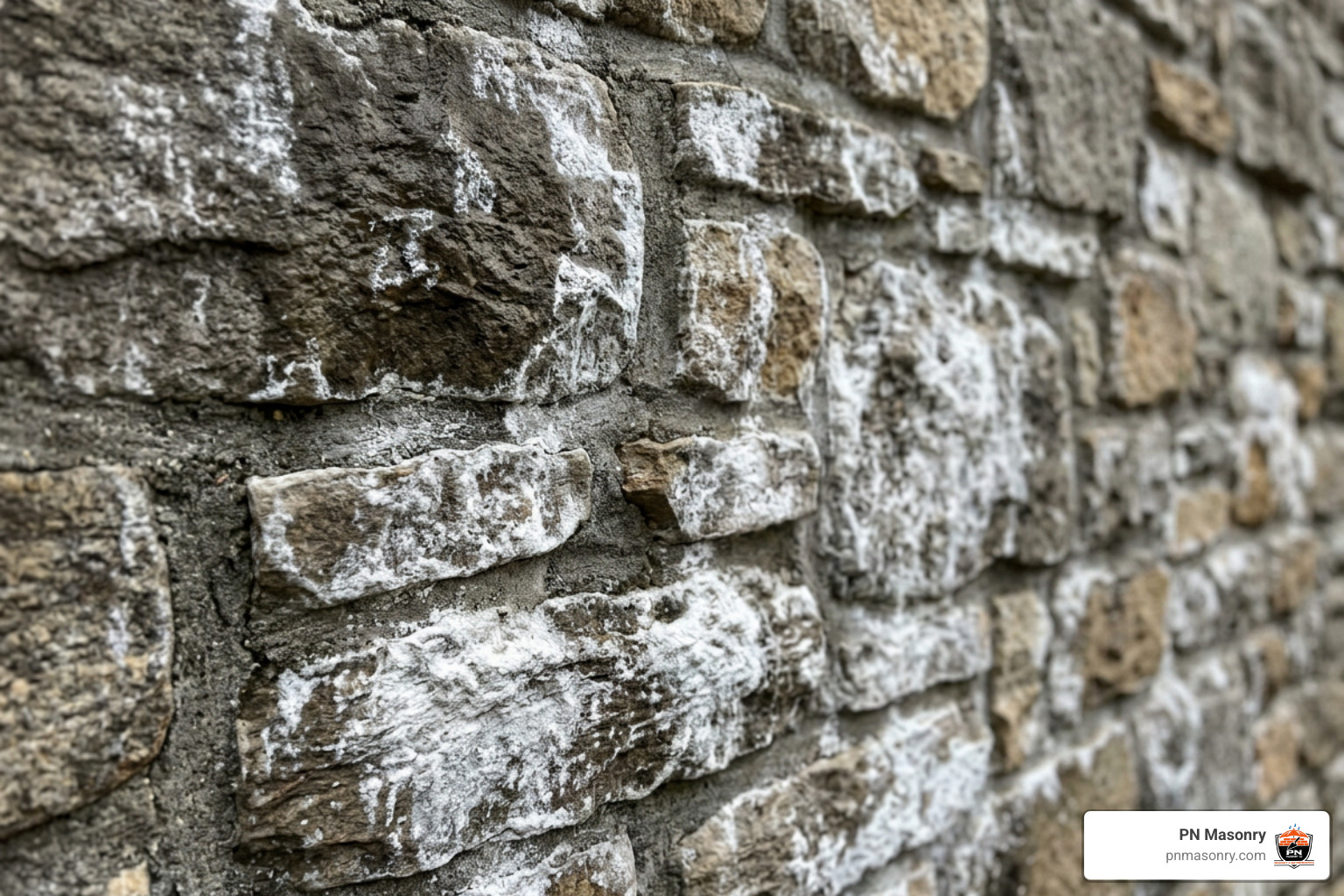
Common Sealing Mistakes and Long-Term Maintenance
Even using premium products, improper application or neglecting routine upkeep can compromise your wall’s defense against water damage. Watch out for these four widespread pitfalls:
- Trapping Water with Film-Forming Sealers: Never apply standard clear acrylic wood/paver high-gloss sealers or elastomeric paints over vertical exterior stone walls. They create an impermeable skin that traps rising or roof-level moisture, causing severe internal spalling and surface pop-outs during winter.
- Applying in Freezing Conditions: Applying water repellents when temperatures dip below 40°F (4.4°C) prevents the chemical catalysts from forming a strong bond with the stone’s mineral matrix.
- Skipping Crack Repairs: Sealers are designed to bridge microscopic capillaries, not open settlement cracks. Any joint crack wider than 1/64 inch (0.4 mm) must be pointed or filled with an elastomeric masonry caulk prior to sealing.
- Over-Application and Puddling: Applying too much product in a single pass can lead to surface ponding, leaving behind a waxy, sticky, or milky residue that attracts dirt and airborne contaminants.
Ongoing Inspection and Maintenance
Stone sealers are durable, but they do not last forever. Establish a seasonal inspection routine to protect your investment:
- Perform an Annual Water Splash Test: Every spring, spray water from a garden hose onto several sections of your stone wall. If the water beads tightly and runs off without altering the stone’s color, the protective barrier is performing correctly. If the stone darkens instantly and absorbs the water, the repellent has worn away and needs reapplication.
- Avoid Harsh Acidic Cleaners: Never wash sealed stone using muriatic acid, hydrochloric acid, or high-pH chemical degreasers. These strip the silicone molecules from the pore structure and etch soft stone surfaces like limestone and marble. Use only pH-neutral, non-ionic masonry soaps.
- Protect Masonry from Deicing Salts: When clearing walkways adjacent to stone walls, avoid rock salt (sodium chloride) and calcium chloride. Melted salt runoff wicks into the base of stone walls via capillary action. When the water evaporates, the salt recrystallizes inside the stone pores (subflorescence), generating expansive pressures exceeding 10,000 PSI that shatter stone faces. Use non-corrosive sand for traction instead.
If you are maintaining an entire property that includes concrete driveways, flatwork, or foundation walls alongside natural stone structures, coordinating your treatment plan with specialized concrete sealing services ensures uniform freeze-thaw protection across all your mineral surfaces.
Frequently Asked Questions About Stone Wall Sealants
What is the difference between a stone sealant and a stone stain?
A stone sealant is primarily designed to provide a protective, water-repellent barrier. Penetrating sealants soak into the mineral pores without altering the color, texture, or natural appearance of the stone, maintaining complete vapor breathability.
A stone stain, by contrast, contains suspended mineral pigments or acid-reactive compounds designed to chemically alter or enhance the color of the stone. While some modern masonry stains contain hydrophobic additives that offer mild water resistance, their primary purpose is cosmetic rather than protective. For exterior masonry facing severe weather, applying a dedicated breathable water repellent over bare stone (or compatible stained stone) provides superior defense against moisture penetration and freeze-thaw cycles.
How often does an exterior stone wall require resealing?
High-quality silane/siloxane and polysiloxane water repellents typically provide effective protection for 3 to 7 years, depending on sun exposure, rain intensity, and stone porosity. For example, commercial-grade sealers like Rainguard Stone Sealer provide durable protection up to 5 years when applied at proper spread rates.
Rather than relying strictly on a fixed calendar schedule, perform a water bead test every 12 to 24 months. If water darkens the stone immediately upon contact instead of forming distinct beads, the surface should be cleaned and retreated with a fresh saturation coat.
Are water repellents safe for historic or listed stone structures?
Yes, but only if you select a non-film-forming, 100% vapor-permeable penetrating water repellent. Historic structures built with soft natural stone (such as sandstone or limestone) and traditional lime mortar rely on continuous vapor transmission to stay sound. Trapping moisture inside these assemblies will quickly dissolve lime binders and fracture historic stone faces.
Never apply acrylics, urethanes, silicone paints, or dense synthetic coatings to historic or landmarked masonry. Always use an invisible, breathable polysiloxane or silane/siloxane micro-emulsion that meets conservation standards, and consult with a preservation specialist before application.
Conclusion

Protecting your exterior stone wall from moisture intrusion is the single most effective way to prevent structural decay, mortar degradation, and costly masonry repairs. By selecting a high-performance, breathable silane, siloxane, or polysiloxane water repellent, you create an invisible barrier that blocks wind-driven rain and stops freeze-thaw spalling while allowing internal water vapor to escape freely.
Whether you need to preserve historic natural stone, protect newly laid masonry, or restore an expansive commercial facade, professional preparation, mortar repair, and correct saturation application make all the difference. When you are ready to safeguard your property with durable, weather-tested protection, turn to the trusted specialists at PN Masonry for comprehensive masonry repair, tuckpointing, and high-performance sealing solutions tailored to your building’s unique architecture.