
Why a Chimney Liner Protects Your Home and Heating System
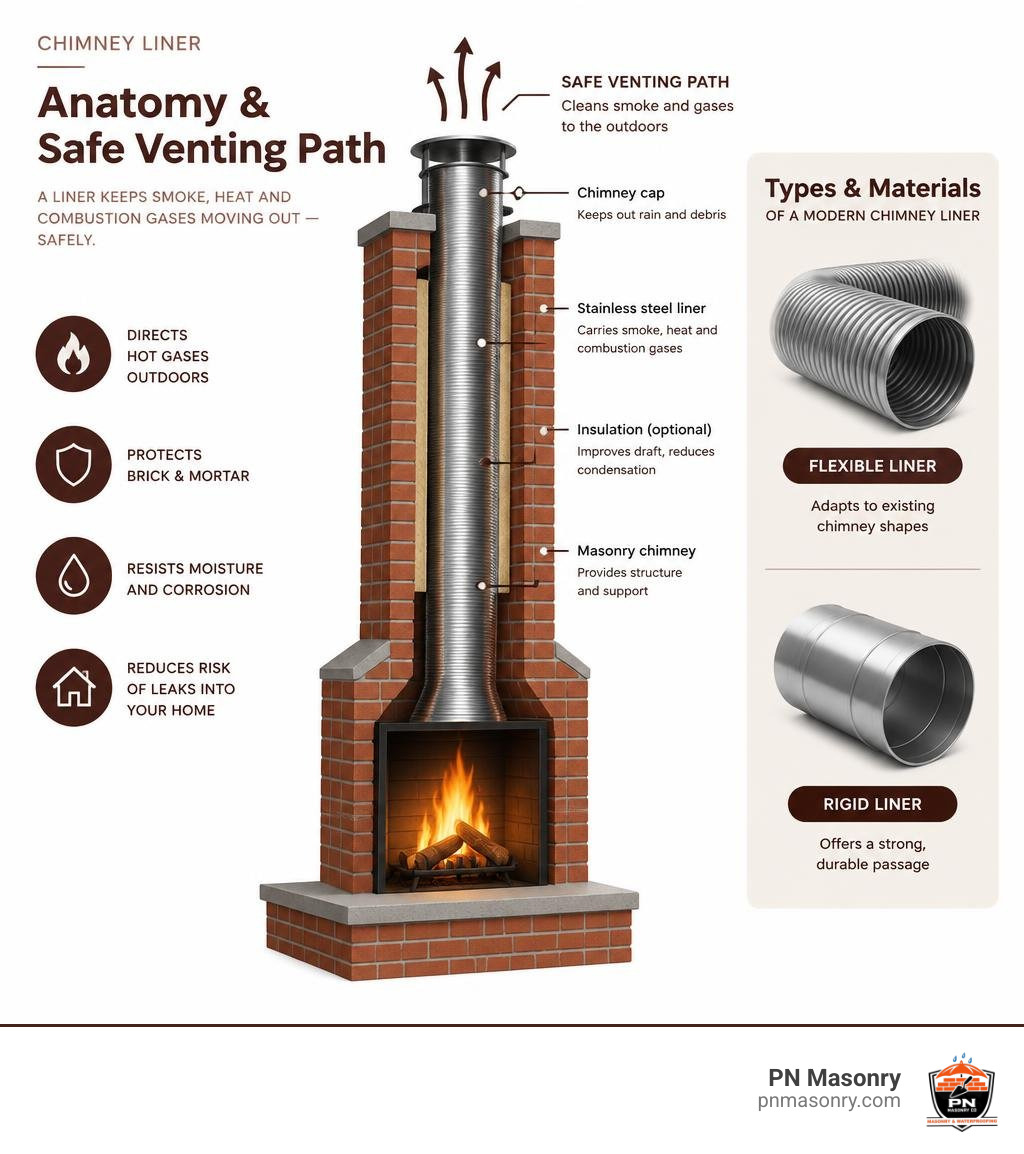
A chimney liner is the protective passage inside a chimney that carries smoke, heat, and combustion gases safely outdoors. It helps protect brick and mortar from heat, moisture, and corrosive byproducts while reducing the risk of smoke or carbon monoxide leaking into the home.
For most masonry chimneys, a properly sized stainless steel liner is a reliable relining option. The right choice depends on the appliance, fuel type, chimney shape, clearance needs, and local code requirements. A liner may also need insulation to improve draft, limit condensation, and meet its tested safety listing.
If you notice smoke backdrafts, tar or moisture stains, cracked clay flue tiles, crumbling mortar, or a chimney that was built for a different appliance, it is time for a professional assessment. Stainless steel chimney liners commonly last about 15 to 20 years with correct installation, appropriate fuel use, and regular cleaning.
This guide explains the major liner types, materials, sizing rules, insulation options, safety standards, and installation factors so Cook County property owners can make a clear, safe decision before relining a chimney.
Types and Materials of a Modern Chimney Liner
When retrofitting an older masonry stack or outfitting a newly built structure, selecting the right liner style and metal composition dictates how safely and efficiently your heating appliance operates. Modern flue liners serve as an impermeable barrier against extreme heat, acidic moisture, and carbon monoxide. Choosing between single-wall, double-wall, flexible, or rigid designs depends directly on your chimney’s interior architecture and fuel source, as outlined in detailed industry liner specifications.
| Material Grade | Construction Type | Temperature Rating (Continuous / Peak) | Primary Fuel Compatibility | Corrosion Resistance |
|---|---|---|---|---|
| 304 Stainless Steel | Rigid or Flexible Single/Double Wall | 1,000°F / 1,400°F–2,100°F tested | Wood, Wood Pellet | Moderate (Avoid acidic oil/coal) |
| 316L Stainless Steel | Flexible Single/Double Ply or Rigid | 1,000°F / 1,400°F–1,700°F tested | All-Fuel (Wood, Pellet, Gas, Oil) | High (Resists sulfur & acid condensation) |
| 316Ti Titanium Alloy | Triple-lock seam Flexible / Pre-Insulated | 1,000°F / 1,400°F peak | All-Fuel (Wood, Gas, Oil, Coal, Pellet) | Superior (High-temp acid resistance) |
| Aluminum | Lightweight Flexible Corrugated | 470°F (Max operating) | Category I Natural Gas, Propane | Low (Never use for solid fuel or oil) |
Flexible vs Rigid Flue Systems
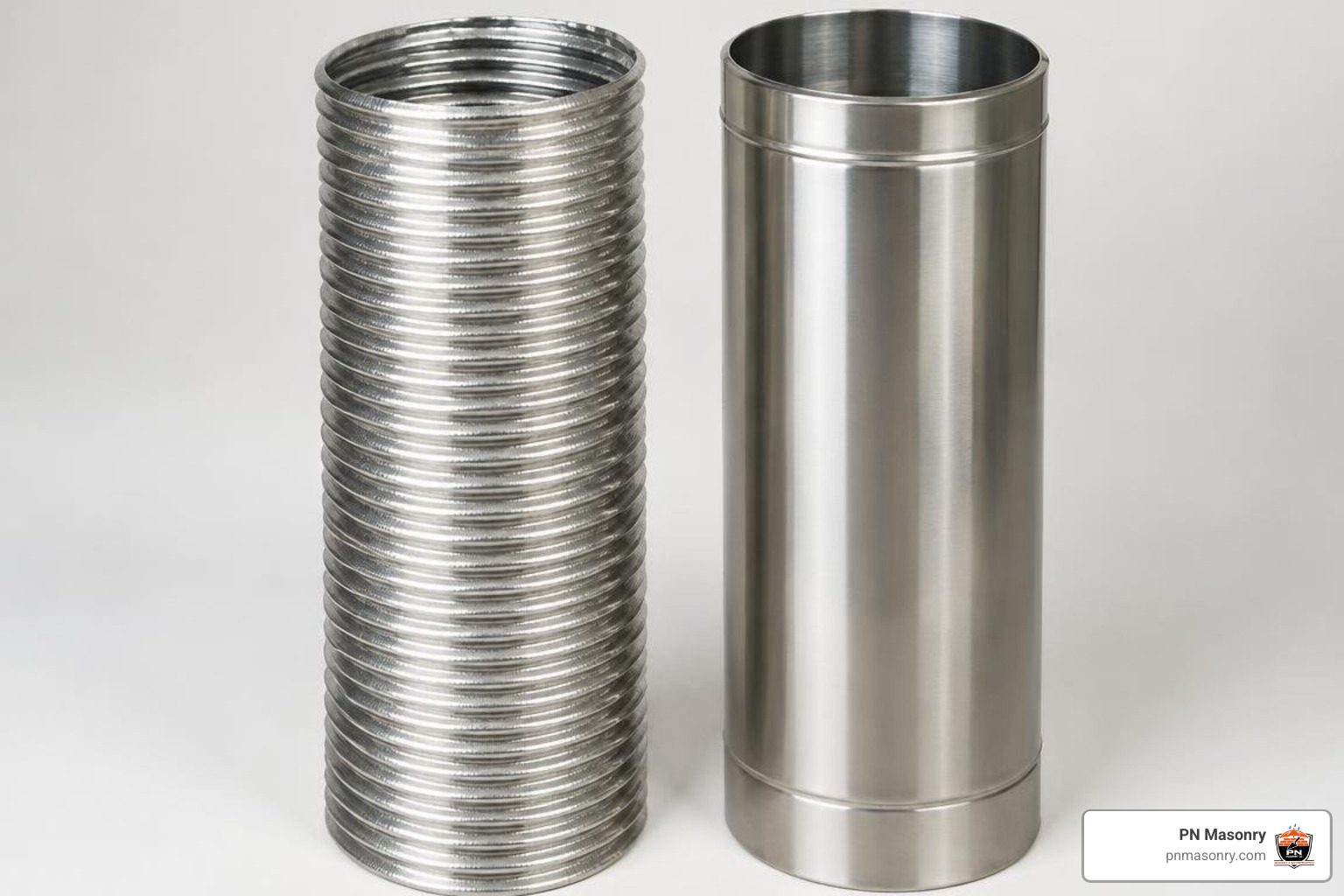
Flexible stainless steel liners are the workhorses of residential retrofits. They excel when navigating historic chimneys with internal shifts, severe offsets, or uneven clay tile remnants. A flexible system bends around structural chimney geometry where a straight pipe cannot pass.
Modern flexible options come in two primary variations:
- Single-Ply (Single-Wall): Constructed from a single continuous band of corrugated stainless steel (often .005″ thick). It provides exceptional bend radius flexibility for difficult, crooked runs. Premium options such as DuraFlex Pro feature 20% more stainless steel per foot than standard entry-level coils.
- Double-Ply (Smooth Inner Wall): Features a corrugated exterior for flexibility paired with a smooth inner liner wall. The smooth interior reduces draft resistance, eliminates turbulence, and prevents creosote buildup from clinging to internal ridges. This makes routine sweeping faster and significantly improves appliance efficiency.
Rigid pipe sections are straight, heavy-duty components featuring continuous laser-welded or factory-finished seams. They provide the smoothest possible flue interior and maximum durability. However, rigid systems require an unobstructed, straight chimney cavity.
They are the preferred choice for new masonry construction or straight exterior chases where maximum draft velocity and easy maintenance are paramount.
Stainless Steel Grades and Fuel Compatibility
Not all metal liners can handle every combustion byproduct. Choosing the wrong alloy can lead to premature metal degradation, pinhole leaks, and dangerous venting failures:
- 304 Stainless Steel: Best suited exclusively for dry, seasoned wood-burning fireplaces and stoves. It handles intense dry heat effortlessly, with rigid systems tested up to 2,100°F for chimney fire safety. However, 304 steel is vulnerable to the acidic condensation produced by oil burners or modern high-efficiency gas furnaces.
- 316L Stainless Steel: An all-fuel alloy containing molybdenum, which shields the metal against harsh chemical corrosion. It safely vents wood, wood pellets, natural gas, propane, and home heating oil. For mixed-fuel applications or residential oil furnace flues, 316L provides exceptional long-term reliability.
- 316Ti (Titanium-Stabilized) Alloy: An advanced alloy engineered with titanium to resist intergranular corrosion at extreme temperatures. Liners made with 316Ti excel under continuous high-heat conditions and harsh acidic cycles produced by modern pellet stoves, high-efficiency appliances, and coal burning.
- Aluminum Liners: Strictly limited to certain low-efficiency, Category I gas appliances and water heaters. Aluminum should never be installed for wood, oil, or pellet venting, as flue gas temperatures and acids will quickly burn through the thin metal.
Clearances, Insulation, and Safety Standards
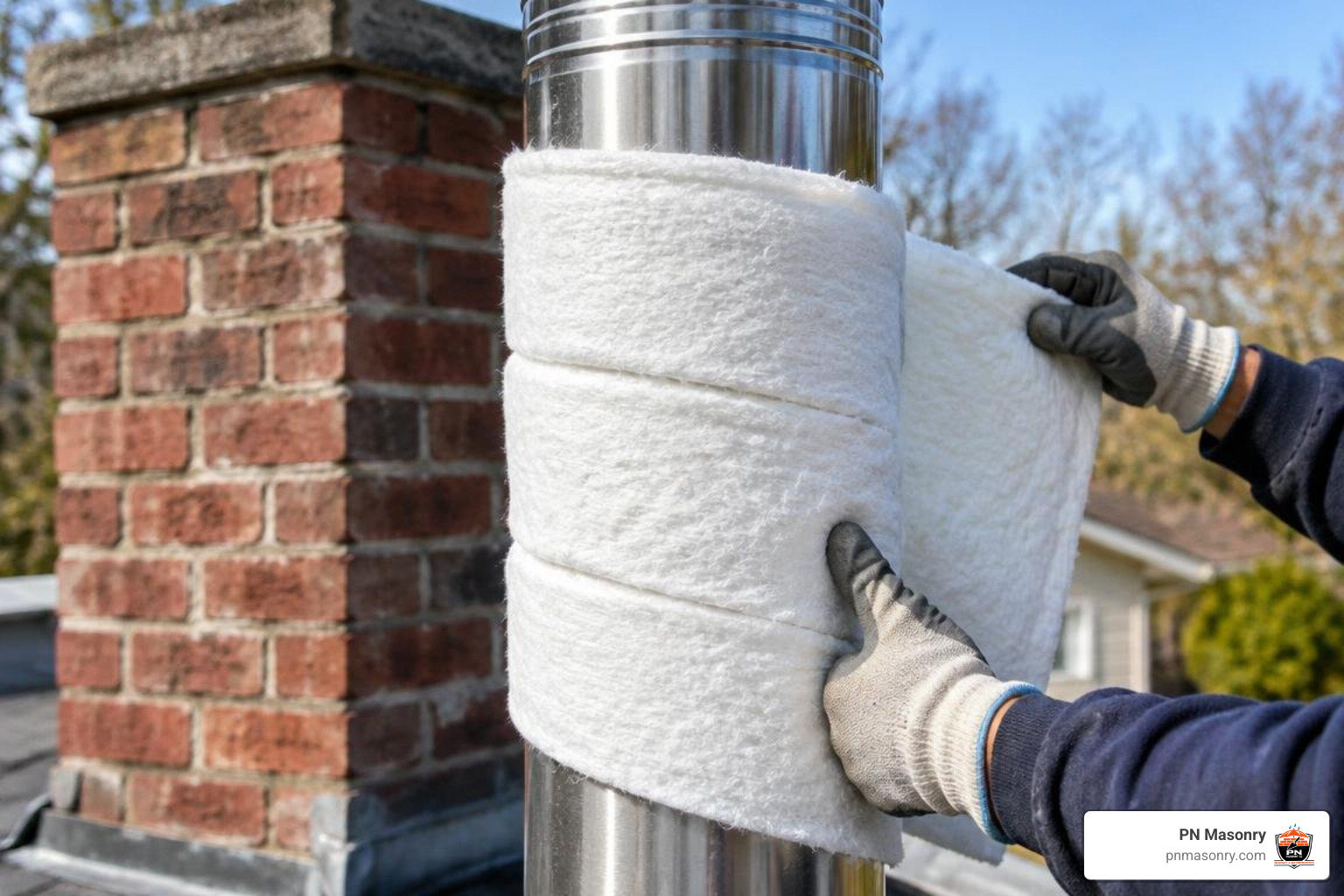
A chimney liner is only as safe as its surrounding thermal buffer. When hot flue gases exit an appliance, cooling within an uninsulated chimney causes draft slowing and moisture condensation. Adding the right insulation layer maintains flue gas temperatures above the dew point (preventing acidic creosote formation) while shielding adjacent wood framing from combustible heat transfer.
Insulation and Zero-Clearance Performance
Applying insulation around a stainless steel liner is essential when meeting strict building codes for masonry chimneys. There are two primary insulation methods:
- Ceramic Blanket Insulation Wrap: A 1/2-inch or 1/4-inch ceramic fiber blanket wrapped around the flexible pipe, secured with foil tape and an outer stainless steel wire mesh (ProMesh).
- Factory-Insulated Double-Wall Systems: Specialized rigid and flexible systems, such as DuraLiner®, feature built-in insulation between a stainless steel inner core (.016″ 304 alloy) and an outer Galvalume skin.
Factory-insulated systems allow for zero-clearance installations—achieving 0″ clearance between the liner and masonry, and 0″ clearance between the masonry exterior and combustible house framing for high-heat wood appliances. By eliminating the manual chore of field-wrapping insulation blankets and installing spacers in tight spaces, factory-insulated rigid and flex systems reduce contractor labor time by 50% or more on challenging retrofits.
Building Codes and Fire Safety Compliance
Chimney relining is governed by strict North American and international safety codes:
- UL 1777 (USA) & ULC S635 (Canada): The definitive safety standards for chimney relining systems, such as tested EXCELiner venting solutions. A UL 1777 listing confirms that the liner has survived simulated chimney fire tests reaching 2,100°F without igniting adjacent combustible materials.
- NFPA 211: The National Fire Protection Association standard governing chimneys, fireplaces, and solid fuel appliances. It mandates specific internal clearances and requires that any replacement liner be certified for the exact connected appliance.
- UK Approved Document J: Statutory guidance outlining that new masonry chimneys and relined flues must be completely sealed, properly sized, and constructed with materials appropriate for their intended fuel application (such as BS EN 1857 standards).
To maintain code compliance, every complete relining assembly must feature factory-hemmed smooth edges, a sealed top support plate to block weather intrusion, a bottom appliance connector adapter, and a certified spark arrestor rain cap.
Relining Assessment and Installation Considerations
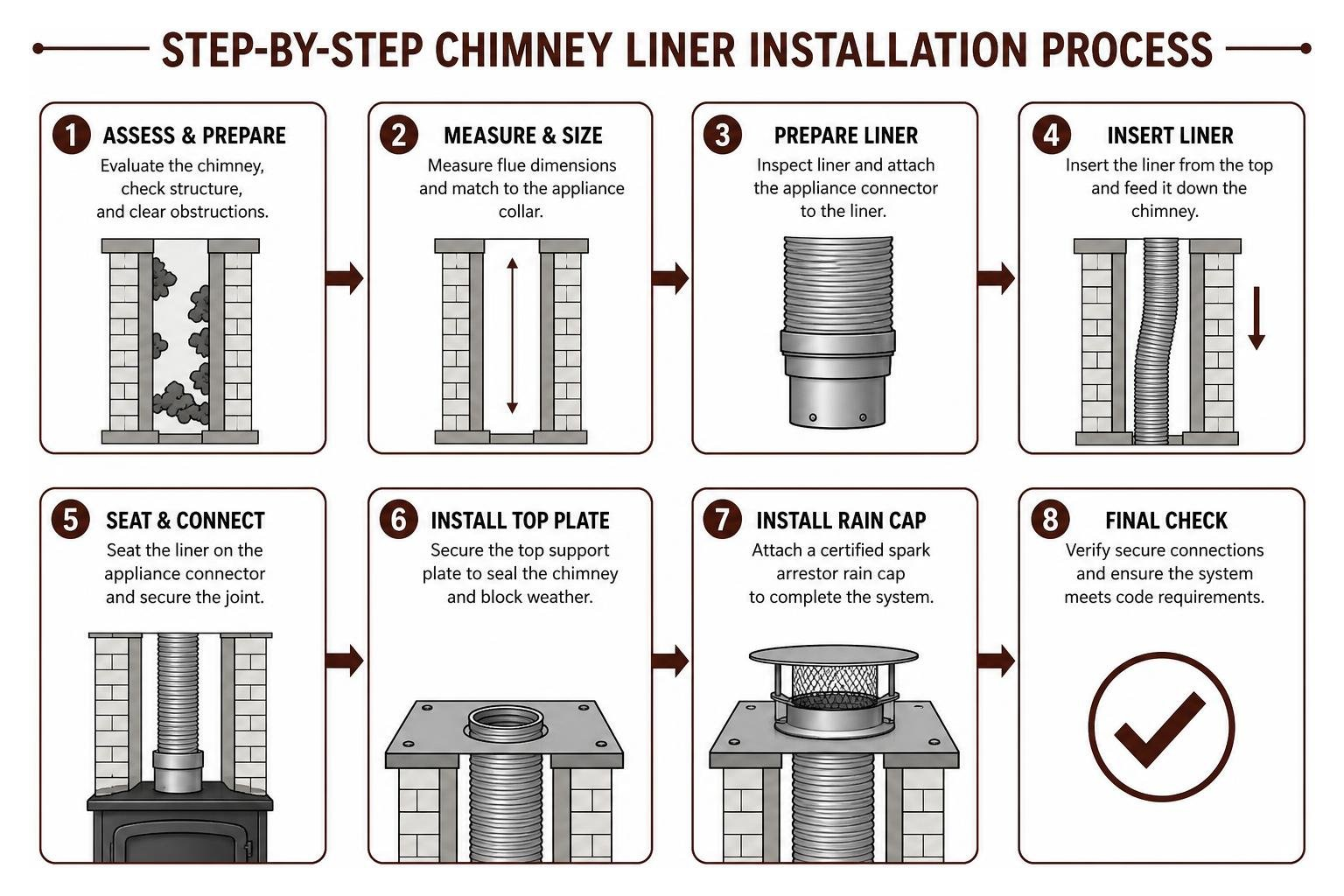
Evaluating your chimney’s internal structure is the first step before purchasing materials. Inserting a new liner requires checking the structural brickwork, removing obstructions, and matching flue dimensions to the appliance collar. If your home has suffered historical weathering, our comprehensive guide on expert chimney fireplace restoration covers how internal venting connects with overall fireplace preservation.
Sizing and Installing a Chimney Liner
Choosing between a complete liner kit and individual components depends on project complexity. Complete kits provide matching components—including the flexible coil, top plate, rain cap, and appliance connector—ensuring guaranteed component compatibility. Purchasing separate components is ideal when custom configurations are required, such as using an ovalized bottom section to fit through a narrow fireplace damper frame.
When planning sizing and installation, keep these core principles in mind:
- Diameter Matching: Always match the inner diameter of the liner to the appliance exhaust collar (commonly 5″, 6″, 7″, or 8″). An oversized liner causes flue gases to expand and stall, leading to heavy creosote accumulation; an undersized liner restricts flow and causes smoke spillage into the room.
- Height and Cut Length: Measure total vertical run from appliance collar to the chimney crown. For rigid systems with overlapping joints, remember to subtract 1½ inches per joint overlap when calculating required straight lengths.
- Internal Prep and Clearances: Sweep the flue thoroughly to remove existing creosote glaze. If an old clay liner is badly offset, the damper throat may need modification or old tiles may need mechanical breakout to accommodate the insulated liner.
- Appliance Connection & Cleanout Access: Secure the bottom snout connector or tee fitting directly to the appliance collar. For masonry heating systems, ensure proper access by maintaining cleanout doors at the base of the flue.
- Top Termination: Secure the liner at the top with a heavy-duty top support plate and flashing. Fasten a storm collar and spark-arresting rain cap to seal the masonry chimney against rain, downdrafts, and animal entry.
Signs Your Chimney Liner Needs Replacement
Clay tile flues and unlined historic brick chimneys degrade over time from freeze-thaw cycles and acidic flue gases. Watch for these clear warning signs that your flue requires relining:
- Shaling Clay Tiles: Piles of thin, broken clay fragments gathering in your fireplace hearth or cleanout pit.
- Eroded Mortar Joints: Missing mortar between internal flue tiles, allowing heat and carbon monoxide to leak into wall cavities.
- Creosote and Moisture Seepage: Dark, sticky tar or white efflorescence stains seeping through exterior brick joints.
- Appliance Upgrades: Installing a modern high-efficiency wood insert, gas furnace, or pellet stove that requires a smaller, dedicated vent diameter to draft safely.
- Structural Degradation: In older masonry, relining often goes hand-in-hand with restoring historic masonry flues. If shifting brickwork has damaged the upper stack, comprehensive chimney rebuilding or targeted chimney crown repair may be required to restore structural stability before the liner is dropped.
Frequently Asked Questions About Flue Relining
Ensuring your chimney system remains safe requires understanding the long-term maintenance, warranty terms, and code expectations associated with professional chimney services.
What is the typical lifespan of a stainless steel chimney liner?
A high-grade stainless steel chimney liner typically lasts between 15 and 20 years, though premium 316L and 316Ti installations often last several decades when properly maintained.
Most quality manufacturers back their products with a Limited Lifetime Warranty. These warranties generally cover defects in materials and manufacturing, with some offering tiered replacement costs after 10 years of service.
To keep warranties valid, manufacturers and fire codes require annual inspections by a certified chimney sweep, burning only seasoned firewood or approved fuels, and avoiding corrosive chemical cleaners.
Is liner insulation always necessary when relining a chimney?
Yes, in most residential scenarios—especially for wood-burning appliances—insulation is required by UL 1777 listing standards to achieve certified zero-clearance safety against adjacent framing.
Even where zero-clearance is not strictly mandated by local building codes (such as some interior gas-venting retrofits), adding insulation is strongly recommended.
Insulation keeps the flue gases warm throughout their ascent, which maximizes draft velocity, prevents room smoking, and stops acidic water condensation from attacking the metal liner.
What is the difference between single-ply and double-ply flexible liners?
The difference lies in the liner’s interior surface:
- Single-Ply Flexible Liners: Formed from a single ribbed sheet of corrugated stainless steel. They are lightweight, highly flexible, and cost-effective, making them easy to manipulate through tight chimney bends. However, the internal ridges create slight airflow turbulence and provide small crevices where creosote can collect.
- Double-Ply (Smooth-Wall) Flexible Liners: Feature an inner smooth wall laminated to a flexible corrugated outer casing. The smooth interior increases draft speed by up to 20%, simplifies seasonal sweeping, and resists creosote accumulation, making it the preferred choice for heavy-use wood stoves and fireplace inserts.
Conclusion
A well-installed chimney liner protects your property’s structural masonry, prevents dangerous carbon monoxide leaks, and ensures your heating appliances operate at peak efficiency season after season. Whether you are retrofitting a historic fireplace with a flexible 316Ti alloy kit or installing a zero-clearance factory-insulated rigid flue, selecting the proper materials and dimensions is vital for fire safety and building code compliance.
If you notice crumbling clay tiles, draft problems, or plan to install a modern heating appliance, our team at PN Masonry is here to help. We provide complete masonry and venting evaluations across Cook County, Illinois, delivering long-lasting brick, block, and chimney solutions that keep your home warm and secure. Contact us today to schedule your comprehensive chimney inspection.